Desert Stargazing Experience in Morocco: Merzouga, Agafay & Zagora
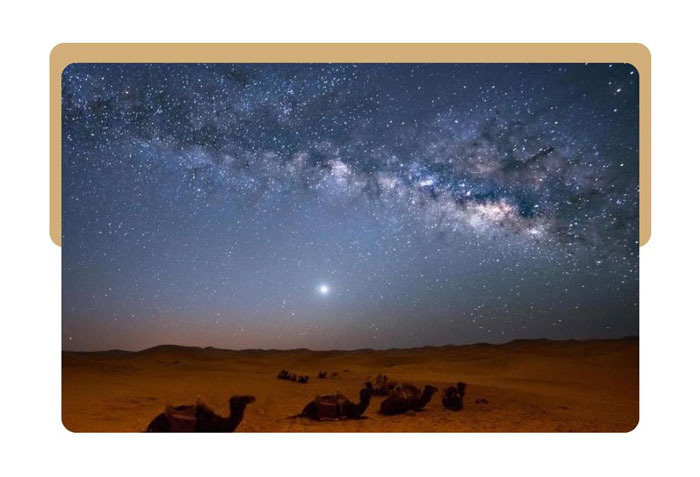
Desert stargazing in Morocco means some of the darkest, driest skies within reach of Europe. Drive a day into the Sahara, or just an hour out of Marrakech into the Agafay, and the Milky Way stops being a photo and becomes a bright band you can pick detail out of with your own eyes. This guide compares the three main areas for a desert stargazing experience in Morocco (Merzouga, Agafay and Zagora), explains when to go, what the night actually looks like, and how to pair it with the geology that shaped this landscape.
Why Morocco is a top destination for desert stargazing
Three things work in Morocco’s favour. The air is dry, so most nights in the desert are cloud-free. Population is very low once you leave the oases, so artificial light is minimal. And the terrain gives you a clear, low horizon in every direction, which matters when you want to watch constellations rise and set.
What you can expect to see with the naked eye on a moonless night:
- The Milky Way as a textured band, with dark dust lanes visible
- Bright planets such as Jupiter and Saturn when they are above the horizon
- Shooting stars, especially during meteor showers such as the Perseids in August
- Dozens of constellations, and satellites crossing the sky
Telescopes and binoculars add star clusters, the Moon’s craters and planetary detail. Ask what equipment your camp provides before you book.
Merzouga, Zagora or Agafay: which area is right for you?
The best choice depends on how much time you have and what you want the landscape to feel like. Distances and drive times are approximate and depend on your route and stops.
| Area | From Marrakech | Landscape | Night sky | Best for |
|---|---|---|---|---|
| Merzouga (Erg Chebbi) | About 560 km, around 9 hours | Tall golden dunes | Very dark, remote | A full Sahara night, 2 to 3 day trips |
| Zagora (Draa Valley) | About 360 km, 5 to 6 hours | Palm groves, smaller dunes, rocky plains | Dark | A shorter Sahara trip with a desert feel |
| Agafay (near Marrakech) | About 45 km, around 1 hour | Stony hills with Atlas Mountain views, no large dunes | Dark, with a faint glow from Marrakech on one horizon | One night or an evening from Marrakech |
Merzouga and the Erg Chebbi dunes
Merzouga is the classic choice. Erg Chebbi is a sea of dunes that rise up to roughly 150 metres, and the camps sit far enough from villages that the sky is properly dark. A typical evening starts with a camel ride or walk onto the dunes for sunset, followed by dinner, a fire and then the stars. If you can spare two nights, you get a second chance at clear skies and a sunrise over the dunes.
Zagora and the Draa Valley
Zagora suits travellers who want a Sahara atmosphere without the longest drive. You pass through the Draa Valley’s palm groves and kasbahs, and the camps sit on smaller dunes and open plains. The sky is dark, and the route works well as part of a longer itinerary heading south.
Stargazing from Marrakech: the Agafay Desert
If you only have an evening or one night, Agafay is the practical answer. It is a stony, hilly desert about an hour from Marrakech, so you can leave in the afternoon, watch sunset over the Atlas Mountains, have dinner and stargaze, then be back in the city or sleep at the camp.
Two honest points. First, Agafay is not a sand-dune desert: the landscape is rock, clay and scrub, which suits photography but not sandboarding. Second, Marrakech is close enough to add a faint glow low on one horizon, so face away from the city and give your eyes 20 minutes to adjust. For the darkest skies and the full dune experience, Merzouga is better; for convenience, Agafay wins. If you are choosing between them for a stargazing night from Marrakech, think of Agafay as the easy option and Merzouga as the deep-sky option.
What to expect during a desert stargazing night
A good night is slow and unhurried. A typical sequence looks like this, though timings shift with the season and the camp:
- Arrive in the late afternoon, settle in and have mint tea.
- Walk or ride out for sunset while the light turns the dunes or hills orange.
- Eat dinner and sit by the fire. Camps keep lights low so your eyes can start adapting.
- Around 60 to 90 minutes after sunset the sky is fully dark. Your guide points out constellations, planets and the Milky Way, and sets up a telescope or binoculars if available.
- Give your eyes at least 20 minutes without looking at a phone screen. Use a red light if you need to see your feet.
- Stay up as long as you like, then sleep under canvas and catch the sunrise.
Best time for desert stargazing in Morocco
The Moon matters more than the month. Plan your trip within about three nights either side of a new moon and the sky will be at its darkest. A bright full moon washes out the Milky Way, even in the Sahara.
Season comes second. March to May and September to October are the most comfortable, with mild evenings and good clarity. November to February brings long, crisp nights but desert temperatures can fall close to freezing after dark, so dress for it. June to August is hot by day, though the Milky Way’s bright core is well placed in the evening sky and the Perseid meteor shower peaks in mid-August.
New moon windows coming up (dates in Universal Time, from the US Naval Observatory):
| New moon | Best nights for stargazing (approx.) |
|---|---|
| 9 December 2026 | 6 to 12 December |
| 7 January 2027 | 4 to 10 January |
| 6 February 2027 | 3 to 9 February |
| 8 March 2027 | 5 to 11 March |
| 6 April 2027 | 3 to 9 April |
| 6 May 2027 | 3 to 9 May |
| 4 June 2027 | 1 to 7 June |
| 2 August 2027 | New moon and total solar eclipse, visible across northern Morocco |
What to bring for a stargazing trip
- Warm layers, plus a hat and gloves from November to March
- A headlamp with a red-light mode
- A scarf or buff for wind and fine dust
- A camera with manual settings and a tripod, if you want photos
- A power bank, because cold drains batteries quickly
- A sky-map app downloaded in advance, since signal can be weak
- A reusable water bottle
For Milky Way photos, a wide lens at its widest aperture, about 15 to 20 seconds of exposure and a high ISO such as 3200 is a sensible starting point. Adjust from there, and use a timer or remote so the tripod does not shake.
Combine stargazing with the geology of the Sahara
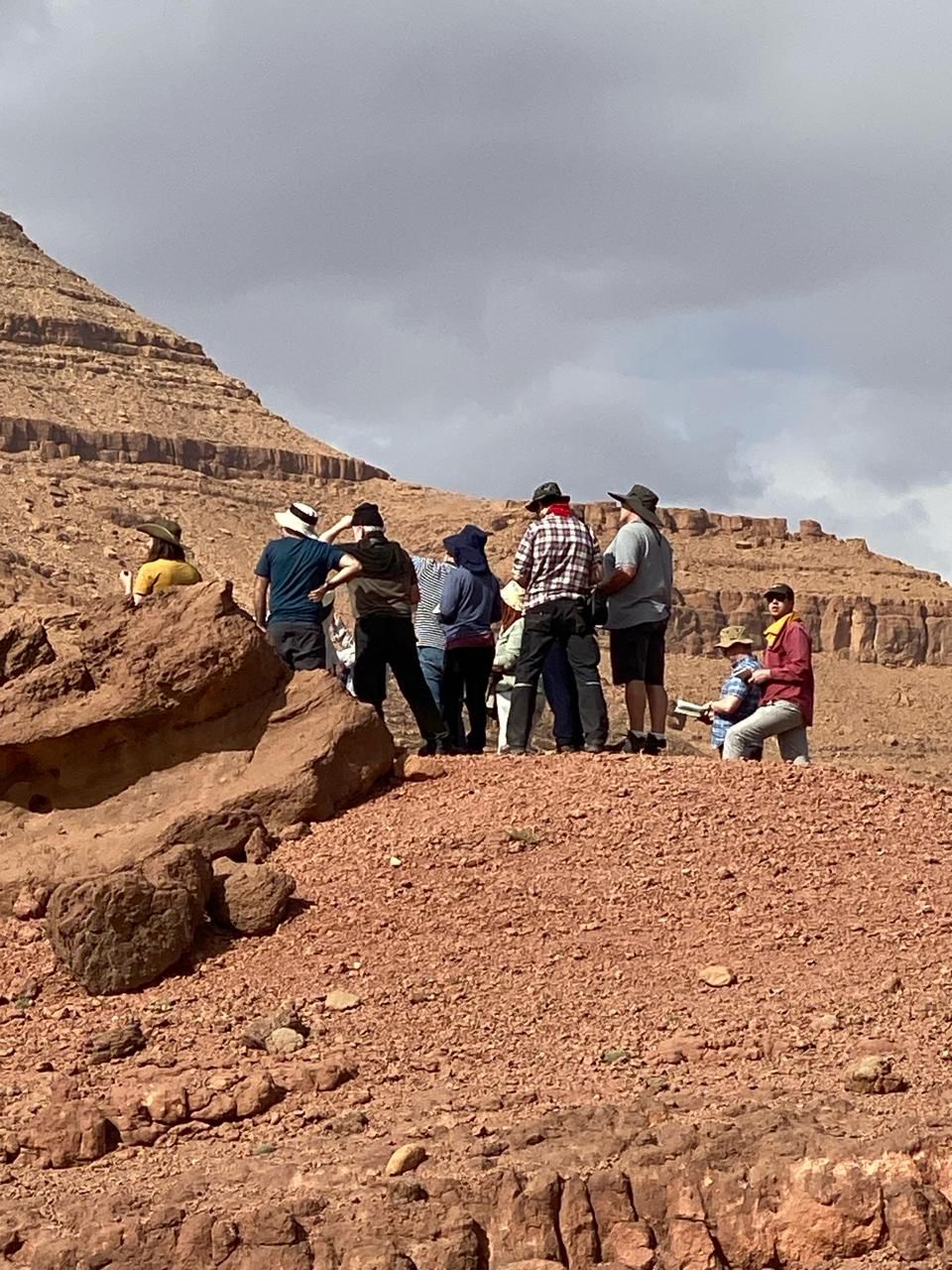
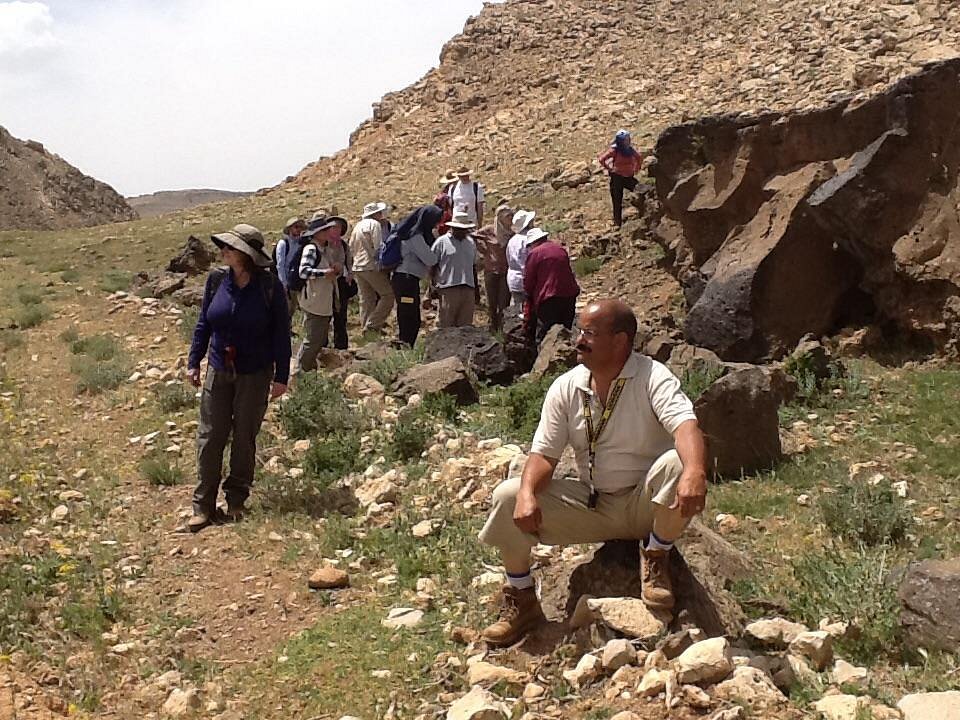
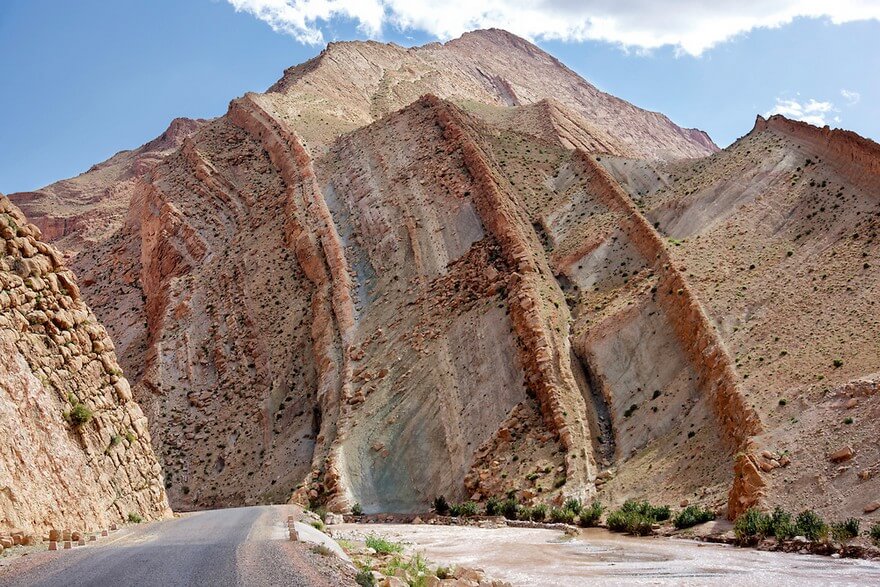
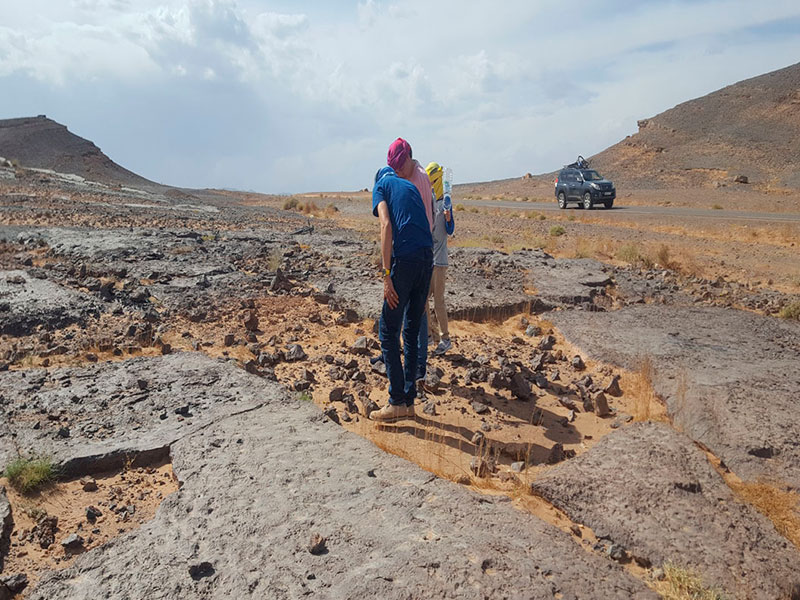
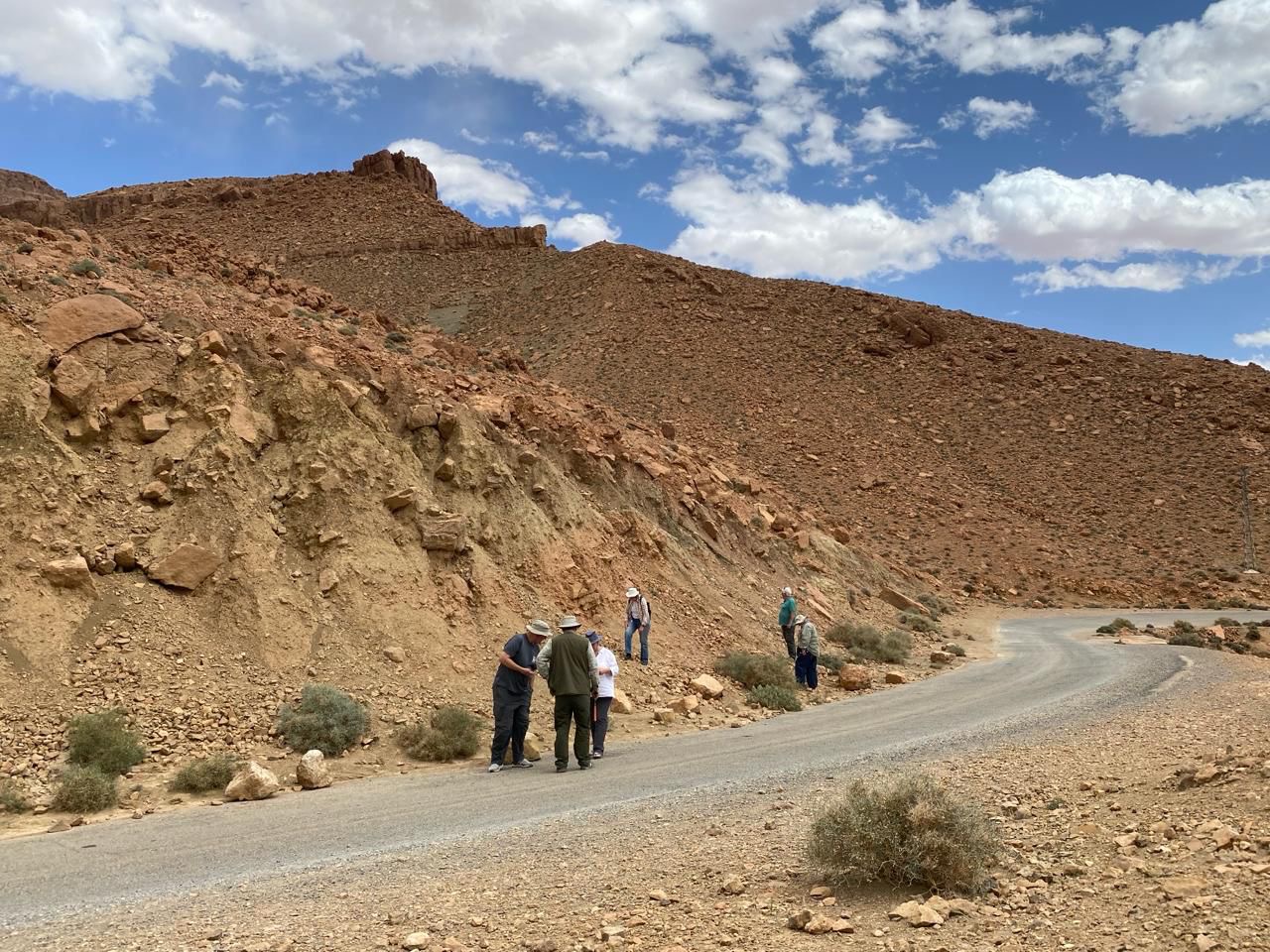
This is where a night under the stars with Atlas Geo Tours differs from a standard camp stay. The same landscape you are looking over by day tells a story that is just as old as the sky above it.
- The Erg Chebbi dunes are made of wind-blown sand, a process you can read about in our guide to how the Erg Chebbi dunes formed.
- The Sahara was green and wetter in the past, which is why fossils and ancient riverbeds appear in places that now look empty.
- Around Alnif and Erfoud, fossil-rich rock layers hold trilobites and other marine life; see our fossil hunting guide for more.
- Meteorites fall on every desert, and the Moroccan Sahara is known for them: read about meteorite hunting in Morocco.
If you want the full mix, our 5-day astronomy and geology tour pairs stargazing nights with guided days in the field.
Plan your desert stargazing experience
Tell us your dates, group size and starting city, and we will suggest the right area, whether that is Merzouga, Zagora or Agafay, and time the trip around the next new moon. You can also browse our stargazing tours or contact us directly.
Ready to Sleep Under a Blanket of Stars?
Don’t just dream about the cosmos—live it in the heart of the Sahara. Book your unforgettable desert stargazing experience in Morocco today and let the silence of the dunes and the sparkle of the Milky Way take your breath away.
Contact us now to plan your magical night under the stars!
Frequently asked questions about desert stargazing in Morocco
1. Where is the best place for stargazing in Morocco?
Merzouga and the Erg Chebbi dunes give the darkest, most remote skies. Agafay is the quickest option from Marrakech, about an hour away. Zagora sits in between, with a Sahara feel and a shorter drive than Merzouga.
2. Can you see the Milky Way in the Moroccan desert?
Yes, on clear, moonless nights you can see the Milky Way as a detailed band. Its bright core is easiest to catch in the evening sky from late spring to late summer. At other times of year you still see the band, plus winter constellations.
3. What is the best month for desert stargazing in Morocco?
The Moon phase matters more than the month, so aim for the three nights either side of a new moon. For comfort, March to May and September to October are ideal. Winter nights are crisp and long but cold.
4. Can I go stargazing from Marrakech in one night?
Yes. The Agafay Desert is about an hour from Marrakech, so you can leave in the afternoon, watch sunset, have dinner and stargaze, then return to the city or sleep at a camp. Some light from Marrakech shows low on one horizon.
5. Do I need experience or special equipment?
No. Your guide points out constellations and planets, and camps may provide binoculars or a telescope; ask before you book. Bring warm clothes and, if you want photos, a camera and tripod.
6. How cold does it get at night in the desert?
Very cold in winter. Temperatures can drop close to freezing after dark from November to February, and evenings stay cool in spring and autumn. Pack warm layers, a hat and gloves, and a blanket if you feel the cold.
7. Is a stargazing night suitable for children?
Usually yes, as long as they are dressed warmly and can stay up late. Tell us the ages of everyone in your group when you enquire so we can adapt the evening.
8. Can I photograph the stars with my phone?
Recent phones with a night mode can capture the Milky Way if you use a tripod or lean the phone on something steady. A camera with manual settings gives the best results, but a phone is enough for a keepsake photo.
9. How many nights should I book?
One night works for Agafay. For Merzouga or Zagora, two nights give you a second chance if clouds or a bright moon spoil the first evening, and time to enjoy the dunes by day.
Explore Related Geology Tours in Morocco
Ready to see Morocco's geology in person? These Atlas Geo Tours combine fossils, minerals, mountains, and dramatic landscapes.