Trilobites to Ammonites: A Beginner’s Guide to Morocco’s Fossils
Long before the Sahara became a desert and millions of years before the Atlas Mountains rose from the Earth, much of Morocco lay beneath vast tropical seas filled with strange and fascinating creatures.
Today, evidence of those ancient worlds remains preserved in stone. Across southeastern Morocco, fossil-rich landscapes reveal marine animals that lived hundreds of millions of years ago, making the country one of the most important fossil destinations on Earth.
Collectors, scientists, students, and curious travelers visit Morocco every year to explore fossil sites, learn about prehistoric life, and discover why the country has become internationally famous among geology enthusiasts.
For beginners, however, the world of fossils can feel overwhelming. Terms like trilobite, ammonite, orthoceras, and Devonian may sound unfamiliar at first.
This Morocco fossils guide explains the most common fossils found in Morocco, where they come from, and why they matter.
Why Morocco Is Famous for Fossils
Morocco’s fossil wealth is the result of an extraordinary geological history.
Hundreds of millions of years ago, large parts of present-day Morocco were covered by shallow oceans. Marine organisms lived, reproduced, and eventually died within these environments.
Over time, layers of sediment buried their remains. Under the right conditions, those remains fossilized and became preserved within rock formations.
Later geological events, including mountain building and erosion, exposed these fossil-bearing layers at the surface.
Today, southeastern Morocco contains some of the world’s richest fossil deposits, particularly around:
- Erfoud
- Alnif
- Rissani
- Erfana
- The Anti-Atlas Mountains
These regions attract researchers and fossil enthusiasts from around the globe.
What Exactly Is a Fossil?
Before exploring Morocco’s famous specimens, it helps to understand what fossils actually are.
A fossil is any preserved evidence of ancient life.
This may include:
- Bones
- Shells
- Teeth
- Footprints
- Plant remains
- Burrows
- Entire organisms
Most fossils form when an organism becomes rapidly buried beneath sediment. Over millions of years, minerals gradually replace or preserve the original structures.
The result is a natural record of life from Earth’s distant past.
Fossils allow scientists to reconstruct ancient ecosystems and understand how life evolved through time.
Trilobites: Morocco’s Most Famous Fossils
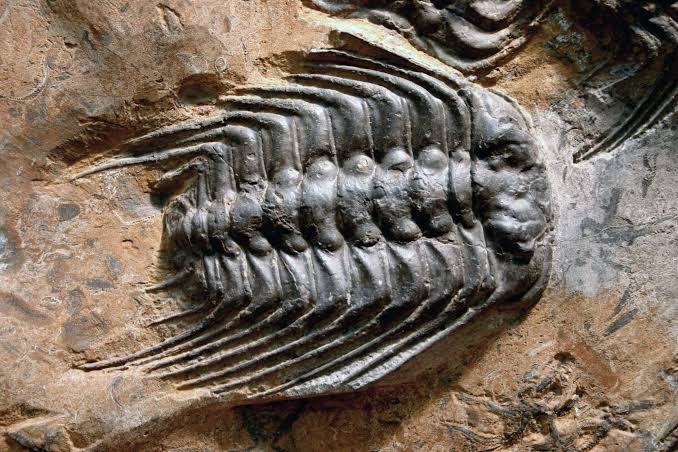
If Morocco has a fossil celebrity, it is undoubtedly the trilobite.
What Were Trilobites?
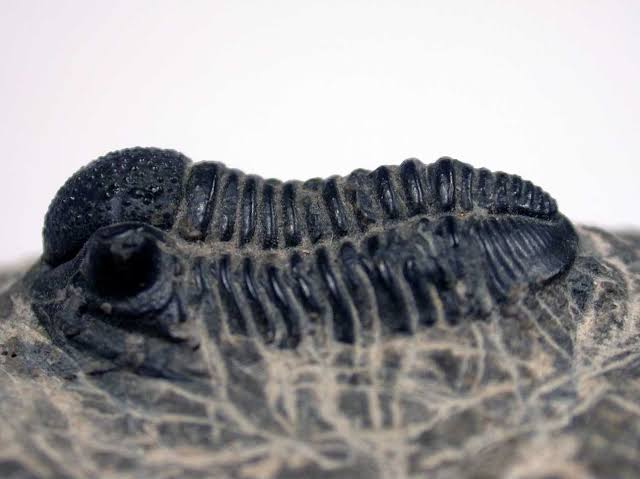
Trilobites were marine arthropods that lived in Earth’s oceans for approximately 270 million years before disappearing during the Permian mass extinction.
Although often compared to insects, they are more closely related to modern horseshoe crabs and certain marine arthropods.
Why Are Moroccan Trilobites Special?
Morocco contains some of the world’s best-preserved trilobite fossils.
Many specimens display:
- Detailed body segments
- Long defensive spines
- Complex compound eyes
- Exceptional preservation
Some species discovered in Morocco exist nowhere else on Earth.
Because of their diversity and quality, Moroccan trilobites are highly valued by museums, universities, and collectors.
How Old Are They?
Most Moroccan trilobites lived between 400 and 500 million years ago.
That means they existed long before dinosaurs, mammals, birds, and flowering plants.
Ammonites: The Spirals of Ancient Oceans
Another iconic fossil commonly found in Morocco is the ammonite.
What Were Ammonites?
Ammonites were marine animals related to modern squid, octopus, and nautilus species.
Their distinctive spiral shells make them among the most recognizable fossils in the world.
Why Are They Important?
Ammonites evolved rapidly and existed across vast areas of ancient oceans.
Because different species appeared during specific periods, scientists use them to help determine the age of rock formations.
Moroccan Ammonites
Many ammonites found in Morocco display:
- Beautiful shell patterns
- Intricate chamber structures
- Excellent preservation
Some are polished and prepared to reveal stunning internal mineral formations.
Their visual appeal makes them popular among collectors and decorative stone artisans.
Orthoceras: The Ancient Ocean Predators
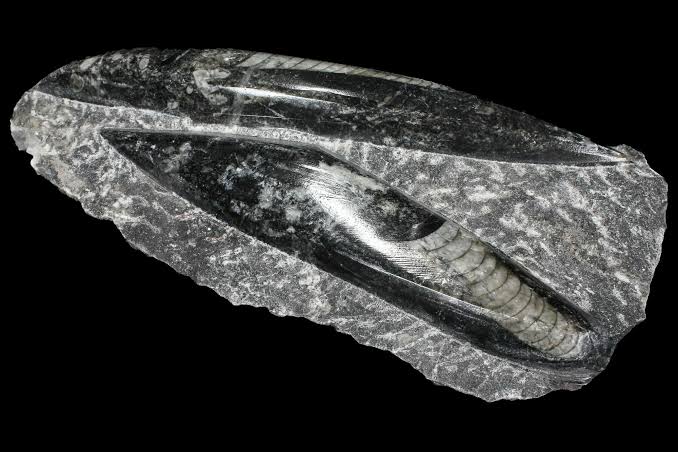
Orthoceras fossils are among the most commonly seen specimens in Moroccan fossil workshops and museums.
What Was Orthoceras?
Orthoceras was an ancient marine cephalopod possessing a long straight shell.
Unlike the spiral shell of an ammonite, Orthoceras had a narrow cone-shaped shell that could reach impressive lengths.
Why Is It Interesting?
Orthoceras occupied a higher position in the marine food chain and acted as an active predator.
Its modern relatives include:
- Squid
- Octopus
- Cuttlefish
Orthoceras fossils provide valuable insight into the evolution of cephalopods over hundreds of millions of years.
Crinoids: The Animals That Look Like Plants
Many beginners mistake crinoid fossils for plant remains.
In reality, crinoids are animals.
What Are Crinoids?
Often called “sea lilies,” crinoids belong to the echinoderm family, making them distant relatives of:
- Starfish
- Sea urchins
- Brittle stars
How Did They Live?
Crinoids attached themselves to the seafloor and used feather-like arms to capture food particles from the water.
Their fossilized stems frequently appear in Moroccan sedimentary rocks.
Although less famous than trilobites, crinoids played a major role in ancient marine ecosystems.
Brachiopods: The Forgotten Marine Survivors
Brachiopods are among the most abundant fossils found in Paleozoic rocks worldwide.
What Are Brachiopods?
At first glance, they resemble clams.
However, brachiopods belong to a completely different biological group.
Why Are They Important?
For hundreds of millions of years, brachiopods dominated marine environments.
Their abundance makes them useful for studying ancient ecosystems and environmental changes.
Many fossil sites in Morocco contain large concentrations of these shell-bearing creatures.
Where Most Moroccan Fossils Come From
The majority of commercially collected and scientifically studied fossils originate from southeastern Morocco.
Key regions include:
Erfoud
Often considered Morocco’s fossil capital, Erfoud contains numerous fossil workshops and processing facilities.
Alnif
Known internationally for its exceptional trilobite discoveries.
Anti-Atlas Mountains
A geological treasure trove preserving rocks from multiple geological eras.
Rissani Region
Rich in both fossil deposits and geological diversity.
Together, these areas form part of what many geologists refer to as Morocco’s Fossil Triangle.
How Fossils Are Prepared
Finding a fossil is only the first step.
Many specimens require extensive preparation before their details become visible.
Preparation may involve:
- Cleaning
- Precision cutting
- Air abrasion techniques
- Mechanical tools
- Polishing
In southeastern Morocco, skilled artisans have developed specialized expertise in fossil preparation.
Some workshops transform rough fossil-bearing rock into museum-quality specimens while preserving delicate details.
Watching this process provides valuable insight into the science and craftsmanship behind fossil preservation.
What Beginners Should Look For
If you’re exploring fossil sites or visiting fossil workshops for the first time, focus on understanding the story behind each specimen rather than simply its appearance.
Consider:
- How old it is
- What environment it lived in
- How it survived
- How it became fossilized
- What it reveals about Earth’s history
Every fossil represents a small piece of a much larger geological puzzle.
The more context you understand, the more fascinating each discovery becomes.
Why Fossils Matter Beyond Collecting
Fossils are far more than attractive objects.
They help scientists answer fundamental questions about:
- Evolution
- Climate change
- Extinction events
- Ancient ecosystems
- Geological history
Without fossils, our understanding of life on Earth would be dramatically incomplete.
Morocco’s fossil deposits continue to contribute important information to global scientific research.
New species are still being discovered, demonstrating that much of the region’s geological story remains untold.
FAQ
Why is Morocco famous for fossils?
Morocco contains exceptionally rich fossil deposits dating back hundreds of millions of years, particularly in the southeastern regions around Erfoud and Alnif.
What is the most famous fossil found in Morocco?
Trilobites are widely considered Morocco’s most famous fossils because of their diversity, preservation quality, and scientific importance.
How old are Moroccan fossils?
Many fossils found in Morocco range from approximately 350 to over 500 million years old.
What are ammonites?
Ammonites were marine animals related to modern squid and octopus that possessed distinctive spiral shells.
What is Orthoceras?
Orthoceras was an ancient marine predator with a long straight shell and is considered an ancestor of modern cephalopods.
Where can visitors see fossils in Morocco?
Popular fossil regions include Erfoud, Alnif, Rissani, and the Anti-Atlas Mountains.
Are Moroccan fossils real?
Yes. Morocco is one of the world’s most important fossil-producing regions, although visitors should purchase specimens from reputable sources.
Is a fossil tour suitable for beginners?
Absolutely. Many geology and fossil tours are designed specifically for travelers with little or no prior knowledge.
Morocco’s fossil heritage offers a remarkable window into Earth’s distant past. From ancient trilobites that crawled across prehistoric seafloors to ammonites that drifted through long-vanished oceans, each fossil tells part of a story spanning hundreds of millions of years.
For beginners, understanding these fossils transforms a simple rock into evidence of ancient worlds that existed long before humans appeared. The landscapes of southeastern Morocco preserve one of the richest geological archives on the planet, making the country a true paradise for fossil enthusiasts.
Whether you are a traveler, student, collector, or simply curious about natural history, exploring Morocco’s fossils is an opportunity to connect directly with some of the oldest chapters in Earth’s story.