Morocco’s Fossil Triangle: Why Geologists Call It a World Wonder
Most travelers come to southern Morocco for the Sahara Desert, ancient kasbahs, or dramatic mountain landscapes. Few realize that beneath the rocky terrain lies one of the most extraordinary geological treasures on Earth.
Stretching across parts of southeastern Morocco, a region often referred to as the “Fossil Triangle” has become internationally famous among geologists, paleontologists, fossil collectors, and science enthusiasts. Here, rocks hundreds of millions of years old preserve evidence of ancient marine ecosystems that existed long before the first dinosaurs appeared.
What makes this region truly remarkable is not simply the quantity of fossils discovered, but their exceptional diversity and preservation. In some areas, visitors can find trilobites, ammonites, orthoceras, and countless other prehistoric creatures that once inhabited an ancient ocean covering much of present-day Morocco.
Today, the Fossil Triangle offers a rare opportunity to walk through landscapes where Earth’s distant past remains visible in the rocks themselves.
What Is Morocco’s Fossil Triangle?
The Fossil Triangle is not an official geographical region but a term commonly used to describe the fossil-rich areas surrounding:
- Erfoud
- Alnif
- Rissani
- Erfana
- Bou Arfa
- The eastern Anti-Atlas region
These locations contain some of the most important fossil deposits in North Africa.
The region sits within geological formations dating back hundreds of millions of years, particularly from the Paleozoic Era, when much of Morocco was submerged beneath a warm shallow sea.
Over time, sediments accumulated on the seafloor, preserving marine organisms that eventually fossilized. Geological uplift later exposed these ancient layers, making them accessible to researchers and collectors.
Today, the Fossil Triangle attracts scientists from around the world who continue to study its rich geological history.
When Morocco Was Underwater
One of the most surprising facts for visitors is that the Sahara landscapes surrounding Erfoud and Alnif were once located beneath an ocean.
Hundreds of millions of years ago, during the Ordovician, Silurian, Devonian, and Carboniferous periods, vast marine environments covered large portions of what is now Morocco.
These seas supported a wide variety of life forms, including:
- Trilobites
- Brachiopods
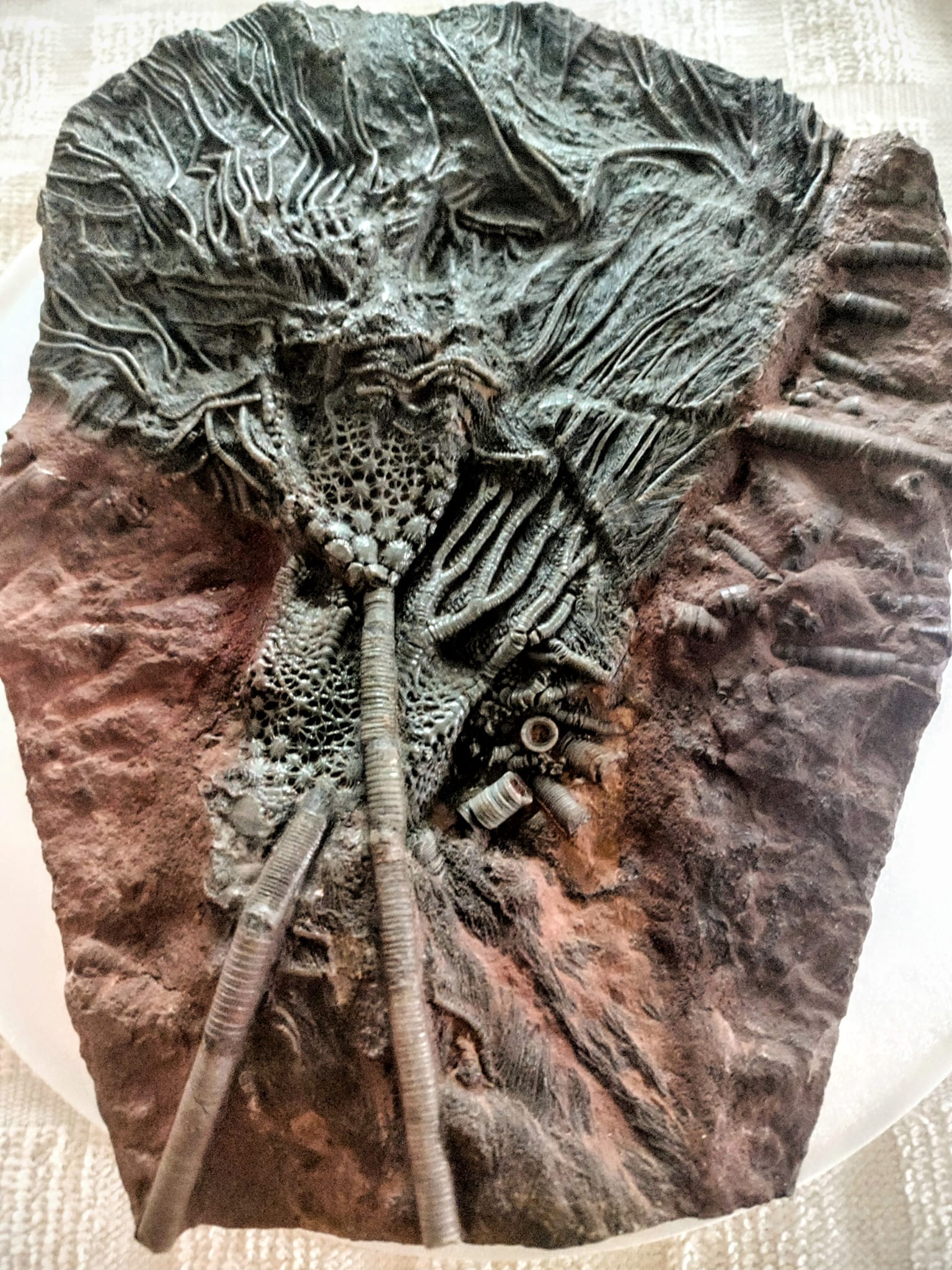
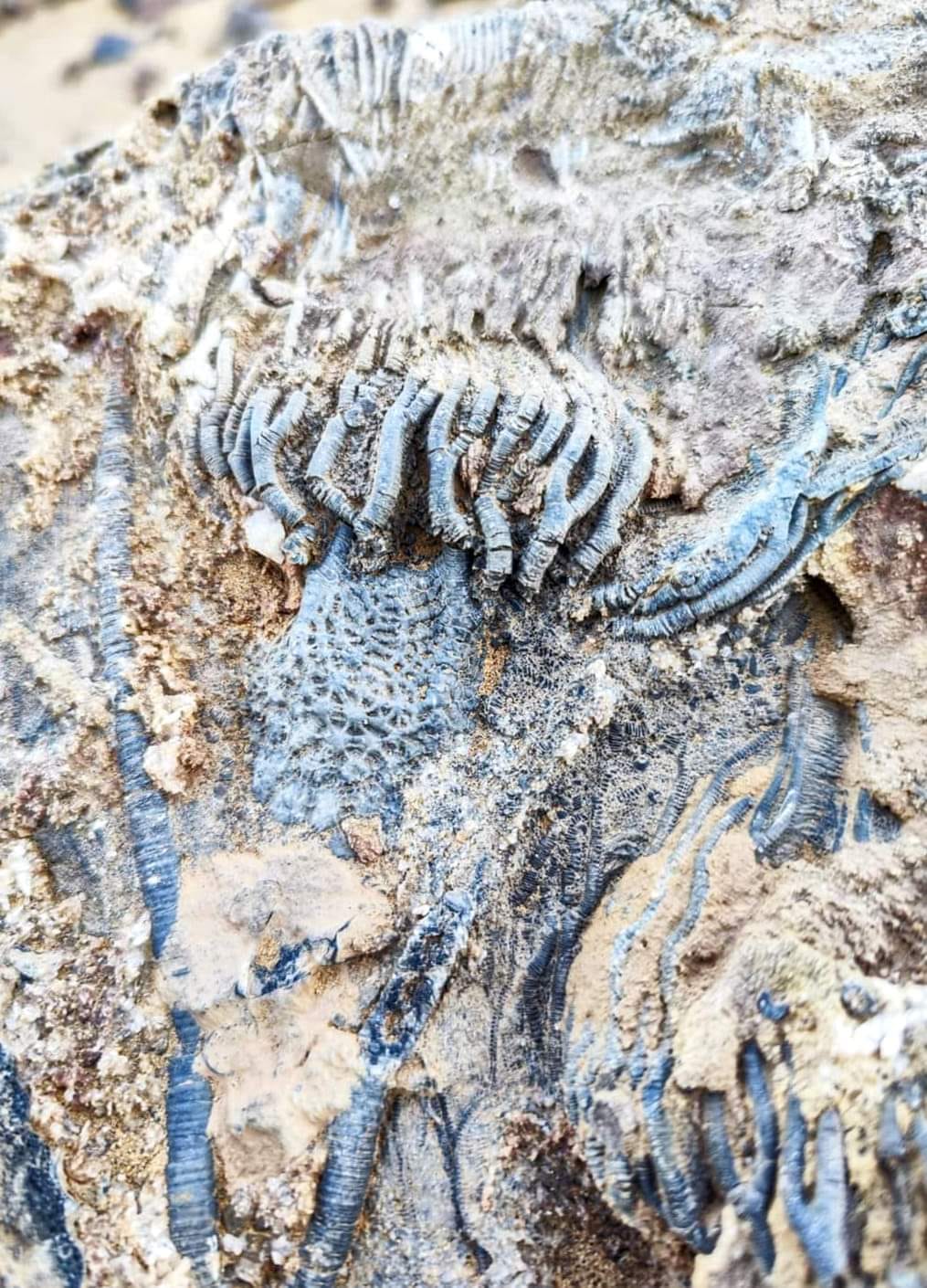
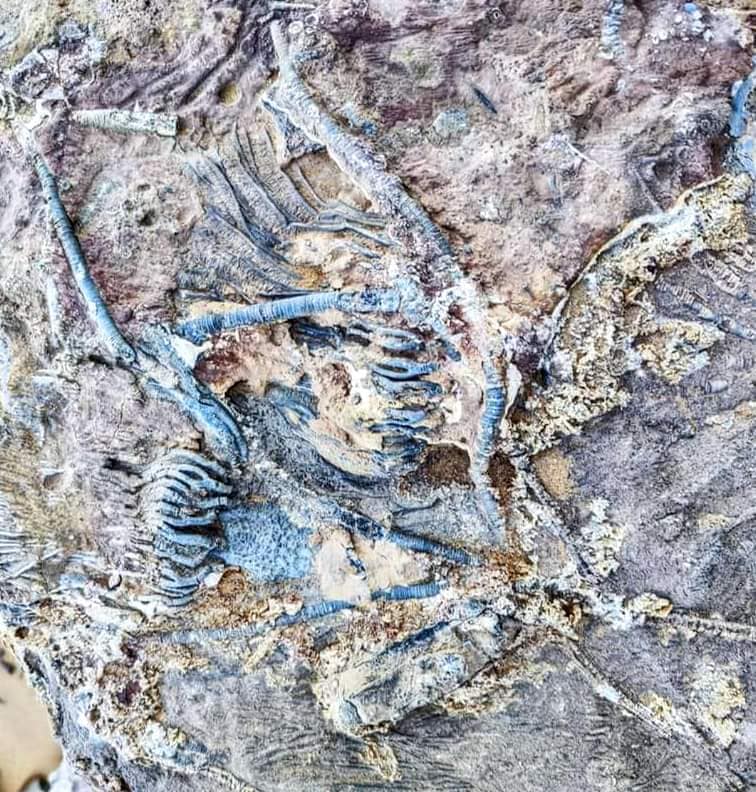
- Crinoids
- Ammonites
- Orthoceras
- Early marine arthropods
As these organisms died, many became buried beneath layers of sediment. Under the right conditions, their remains gradually transformed into fossils.
The result is a geological record that allows scientists to study ecosystems that existed long before mammals, birds, or flowering plants evolved.
In some locations, fossil-bearing rock layers are over 450 million years old.
Why Geologists Consider It a World-Class Site
Many fossil locations exist around the world, but Morocco’s Fossil Triangle stands out for several reasons.
Extraordinary Diversity
Few regions contain such a wide variety of fossil species within a relatively accessible area.
Researchers continue to identify new species from Moroccan fossil deposits, contributing valuable information to the scientific community.
Exceptional Preservation
Many specimens display remarkable levels of detail.
Fine structures that are often lost in other fossil deposits can sometimes be observed in Moroccan examples, making them highly valuable for scientific research.
Accessibility
Unlike some fossil regions that require extensive excavation, many fossil-bearing formations in Morocco are visible at the surface.
This accessibility allows visitors to understand geological processes directly in the field.
Geological Continuity
The region preserves evidence from multiple geological periods, offering a rare opportunity to study millions of years of Earth’s history within a relatively compact area.
Meet the Trilobites: Morocco’s Most Famous Fossils
If one fossil symbolizes Morocco’s geological importance, it is undoubtedly the trilobite.
Trilobites were marine arthropods that dominated Earth’s oceans for hundreds of millions of years before disappearing during the Permian mass extinction.
They are among the oldest and most recognizable creatures found in the Fossil Triangle.
Some Moroccan trilobites possess:
- Complex eyes
- Spines for protection
- Intricate body segmentation
- Remarkable preservation
Because of their diversity and quality, Moroccan trilobites are highly sought after by museums, researchers, and collectors worldwide.
Several species discovered in Morocco cannot be found anywhere else on Earth.
For many visitors, seeing a fossilized creature that lived over 400 million years ago becomes one of the most memorable moments of a geological tour.
Beyond Trilobites: Other Incredible Fossils Found in Morocco
While trilobites attract most of the attention, they represent only a small part of the region’s fossil wealth.
Ammonites
These spiral-shelled marine animals flourished long before becoming extinct alongside the dinosaurs.
Their distinctive shapes make them among the most recognizable fossils found in Morocco.
Orthoceras
These ancient cephalopods possessed long straight shells and were early relatives of modern squid and octopus species.
Crinoids
Sometimes called sea lilies, these marine organisms resemble plants but are actually animals.
Brachiopods
These shell-bearing creatures dominated ancient marine ecosystems for hundreds of millions of years.
Together, these fossils provide a detailed snapshot of prehistoric ocean life across multiple geological eras.
What Happens on a Morocco Fossil Hunting Tour?
A Morocco fossil hunting tour combines science, exploration, and adventure.
Unlike a traditional sightseeing excursion, these tours focus on understanding the landscapes through a geological lens.
Typical experiences include:
Visiting Fossil Sites
Participants explore areas where fossil-bearing formations are naturally exposed.
Learning Geological History
Guides explain how ancient environments formed and how fossils became preserved.
Exploring Fossil Workshops
In towns such as Erfoud, visitors can observe local artisans cutting, polishing, and preparing fossil specimens.
Discovering Ancient Landscapes
Tours often include dramatic desert scenery, mountain formations, and geological features that reveal the region’s complex history.
Whether you are an experienced collector or simply curious about Earth’s past, the experience provides a unique perspective on Morocco.
Are Fossils Still Being Discovered?
Yes.
Despite decades of research, Morocco continues to produce significant fossil discoveries.
Scientists regularly study new specimens from the region, and previously unknown species are occasionally identified.
Ongoing discoveries highlight the scientific importance of the Fossil Triangle and demonstrate that much of its geological story remains unexplored.
This continuing potential is one reason why the region remains so important to paleontologists worldwide.
Why the Fossil Triangle Deserves More Attention
Millions of tourists visit Morocco each year, yet only a small percentage are aware of its geological significance.
The Fossil Triangle offers something rare: a chance to travel through landscapes that reveal nearly half a billion years of Earth’s history.
Unlike museums, where fossils are displayed behind glass, visitors here can observe the geological context in which these ancient organisms were preserved.
For science enthusiasts, students, photographers, and curious travelers, the experience provides a deeper understanding of both Morocco and the planet itself.
It is one of the country’s least-known wonders—and arguably one of its most impressive.
FAQ
What is Morocco’s Fossil Triangle?
The Fossil Triangle refers to fossil-rich regions around Erfoud, Alnif, Rissani, and parts of the Anti-Atlas Mountains, known for their extraordinary concentration of prehistoric fossils.
Why is Morocco famous for fossils?
Morocco contains extensive fossil-bearing rock formations dating back hundreds of millions of years, making it one of the world’s most important fossil-producing regions.
What fossils are commonly found in Morocco?
Common fossils include trilobites, ammonites, orthoceras, crinoids, brachiopods, and numerous ancient marine species.
How old are Moroccan fossils?
Many fossils found in southeastern Morocco are between 350 and 500 million years old.
Can tourists visit fossil sites in Morocco?
Yes. Many fossil tours visit locations around Erfoud, Alnif, and the Anti-Atlas where visitors can learn about geology and fossil formation.
Are Moroccan trilobites rare?
Some species are extremely rare and highly valued by researchers and collectors due to their preservation and scientific significance.
Is a fossil hunting tour suitable for beginners?
Absolutely. Most tours are designed for both beginners and experienced geology enthusiasts.
What makes Morocco different from other fossil destinations?
Morocco combines exceptional fossil diversity, excellent preservation, geological accessibility, and stunning desert landscapes within a single destination.
Long before the Sahara became a desert, an ancient ocean covered much of what is now southeastern Morocco. The creatures that lived within those waters left behind an extraordinary record preserved in stone.
Today, Morocco’s Fossil Triangle offers one of the most accessible and fascinating windows into Earth’s distant past. From world-famous trilobites to spectacular ammonites and ancient marine ecosystems, the region continues to captivate scientists and travelers alike.
For anyone interested in geology, paleontology, or natural history, a Morocco fossil hunting tour is far more than a sightseeing experience. It is an opportunity to stand where oceans once existed and witness evidence of life that flourished hundreds of millions of years before humans appeared.
Few places on Earth tell such an ancient story so clearly.