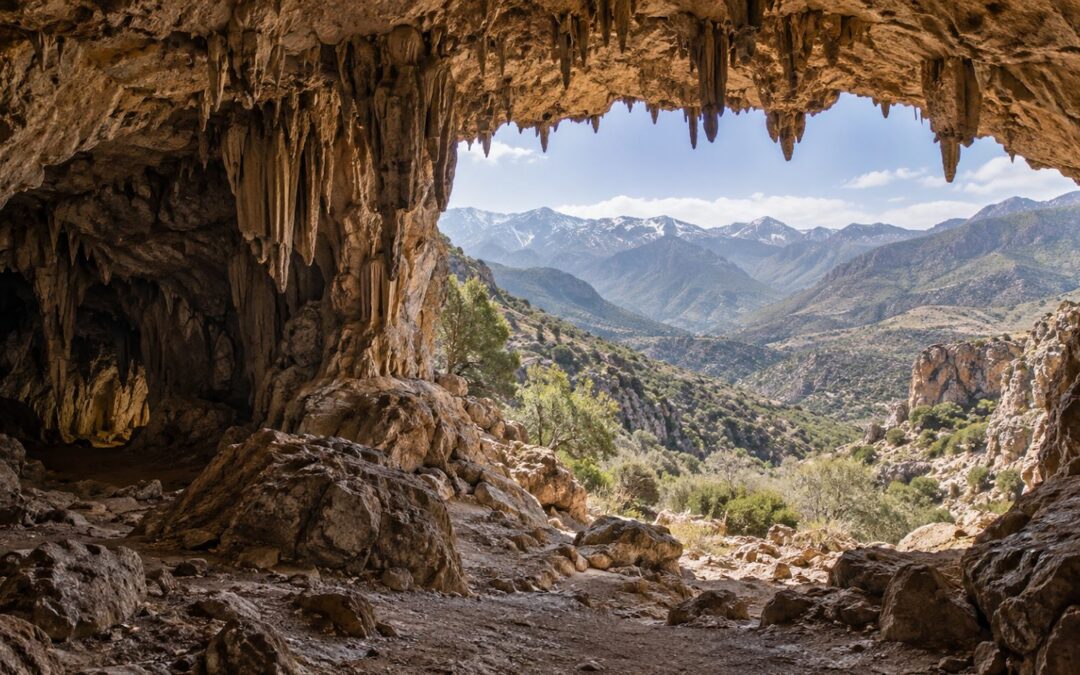
Morocco is famous for mountains, deserts, fossils, ancient cities, and Atlantic and Mediterranean coastlines. Yet some of the country’s most extraordinary landscapes are hidden beneath the surface.
Across the Rif, Middle Atlas, High Atlas, and other limestone regions, water has spent thousands and sometimes millions of years entering cracks, dissolving carbonate rocks, and creating underground passages that range from small shelters to enormous cave systems.
Some caves in Morocco can be visited relatively easily. Others descend hundreds of meters underground and belong to the world of experienced speleologists rather than ordinary sightseeing.
Around Taza, caves disappear beneath the limestone plateaus of the Middle Atlas. In northern Morocco, the Rif contains some of the country’s deepest known underground systems. Near Tangier, the famous Hercules Caves open toward the Atlantic Ocean. Farther east, Grotte du Chameau combines underground water with stalactites and stalagmites. Near Agadir, Win Timdouine reveals an extensive subterranean world associated with water-filled galleries.
For travelers interested in geology, the attraction goes beyond adventure. A cave is a geological process that can be entered.
Its walls reveal how water moves through rock. Stalactites and stalagmites preserve evidence of mineral-rich dripping water. Underground rivers show that drainage systems continue far beneath the visible landscape. Some caves even preserve fossils, archaeological material, or evidence of environmental conditions from the distant past.
If you are searching for the best caves in Morocco to visit, this guide explores the most fascinating examples, explains the geology that created them, and helps distinguish between caves suitable for ordinary travelers and underground systems that require specialist equipment and experience.
Why Does Morocco Have So Many Caves?
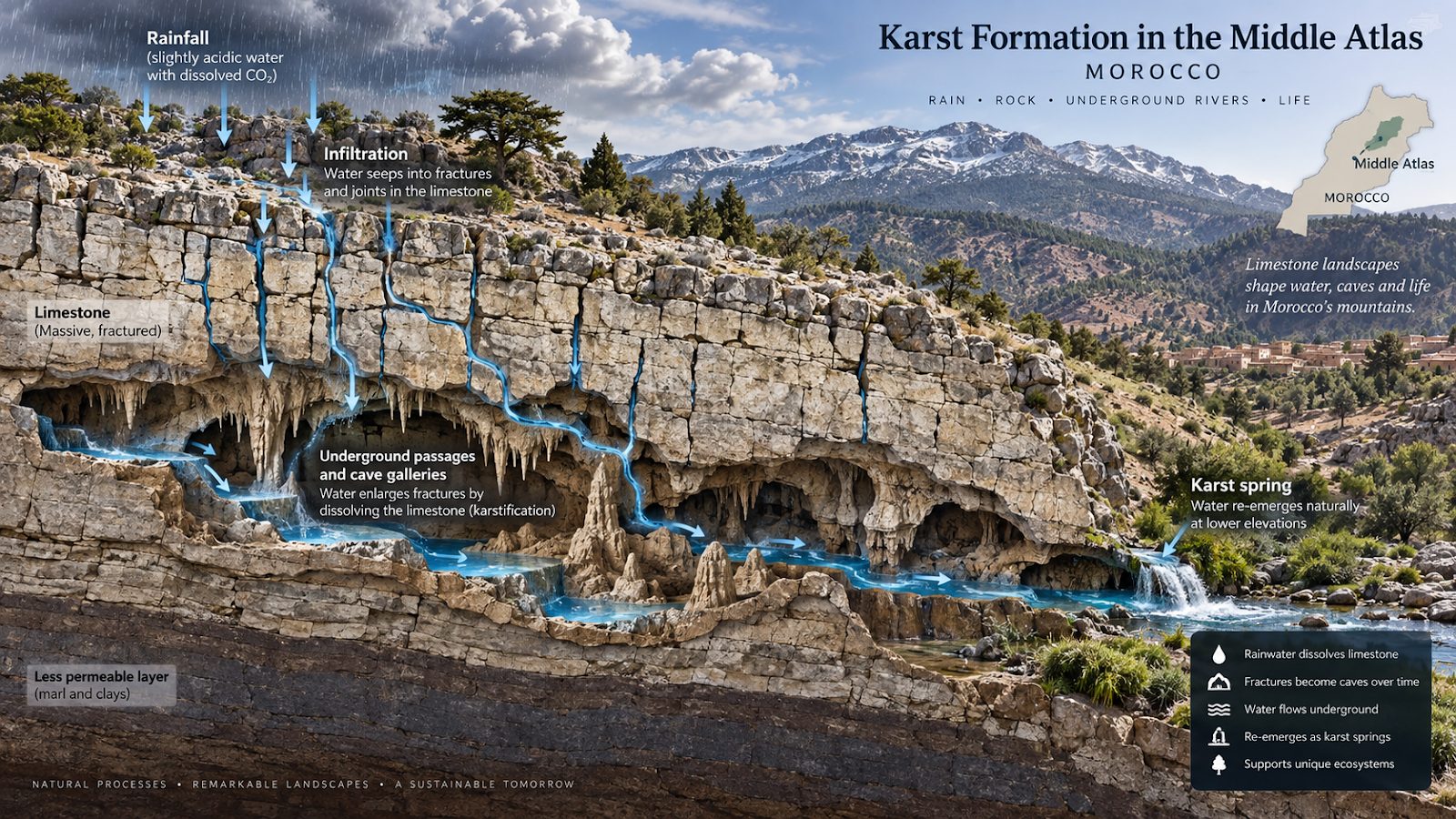
Morocco has extensive areas of limestone and dolomitic rock. These rocks are especially important because they can slowly dissolve when exposed to slightly acidic water.
Rainwater absorbs carbon dioxide from the atmosphere and soil. This creates a weak carbonic acid. The water then enters cracks and fractures in limestone. At first, those openings may be tiny. Over long periods, flowing water enlarges them.
A narrow fracture can become a passage. A passage can develop into a gallery. Several galleries can connect into an underground drainage system. This type of landscape is called karst, and it explains why many of the best caves in Morocco are found in limestone regions.
Karst landscapes can contain:
- caves
- sinkholes
- underground rivers
- springs
- shafts
- disappearing streams
- limestone pavements
- closed depressions
- underground lakes
The Middle Atlas is particularly important for Morocco cave geology because large areas contain Jurassic carbonate rocks that have been fractured by tectonic activity and dissolved by water.
Recent geological research on Middle Atlas caves shows that their shapes are controlled by several factors working together, including rock type, fractures, tectonic structures, flowing water, and past climatic conditions. Scientific research on Middle Atlas cave formation provides a detailed look at this complex karst system.
Readers interested in the larger geological history behind these mountain landscapes can also explore Atlas Geo Tours’ guide to Atlas Mountains geology.
Friouato Cave: One of the Best Caves in Morocco, Near Taza
For many travelers, Friouato Cave Morocco is the most important place to begin exploring the best caves in Morocco.
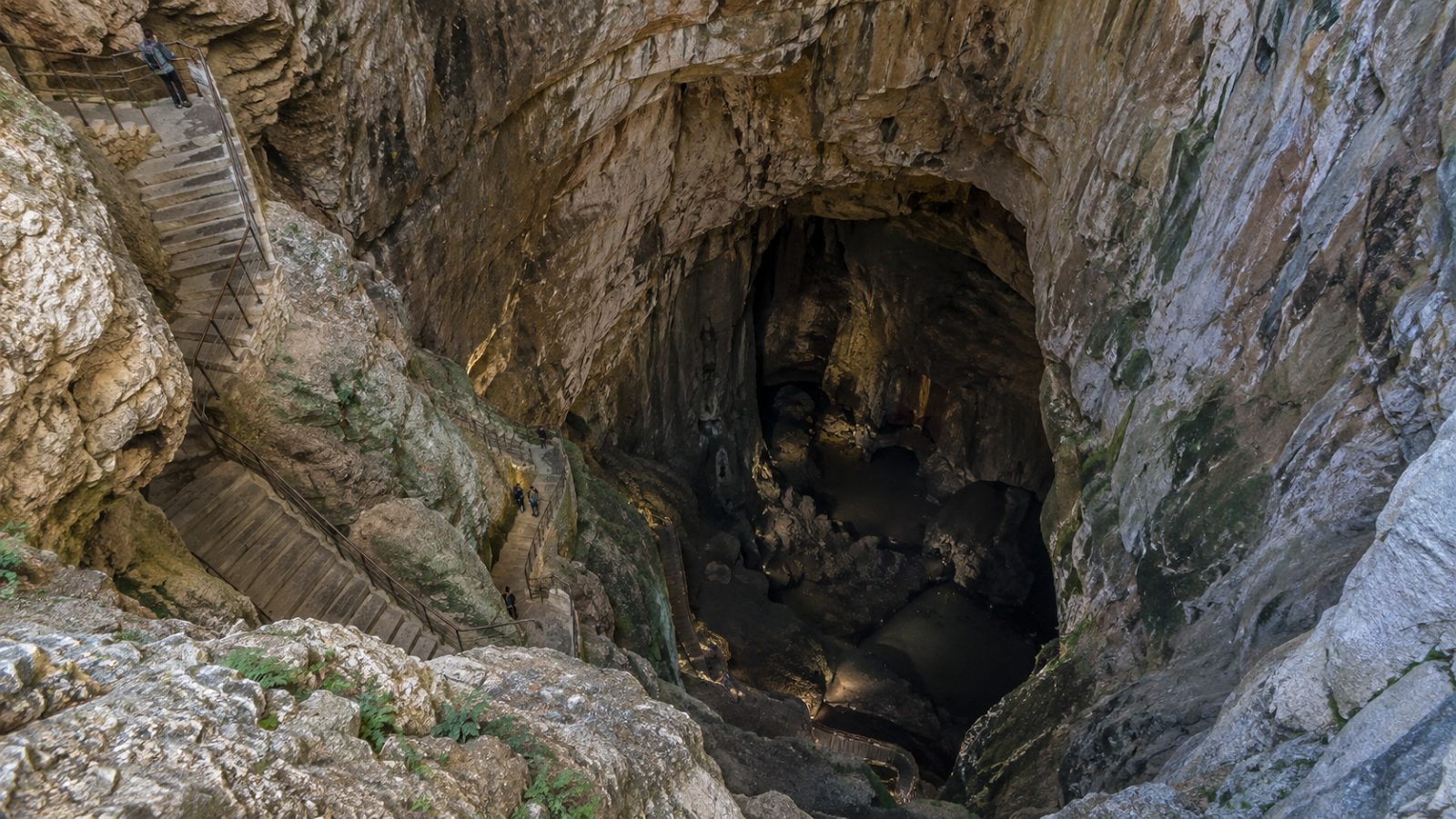
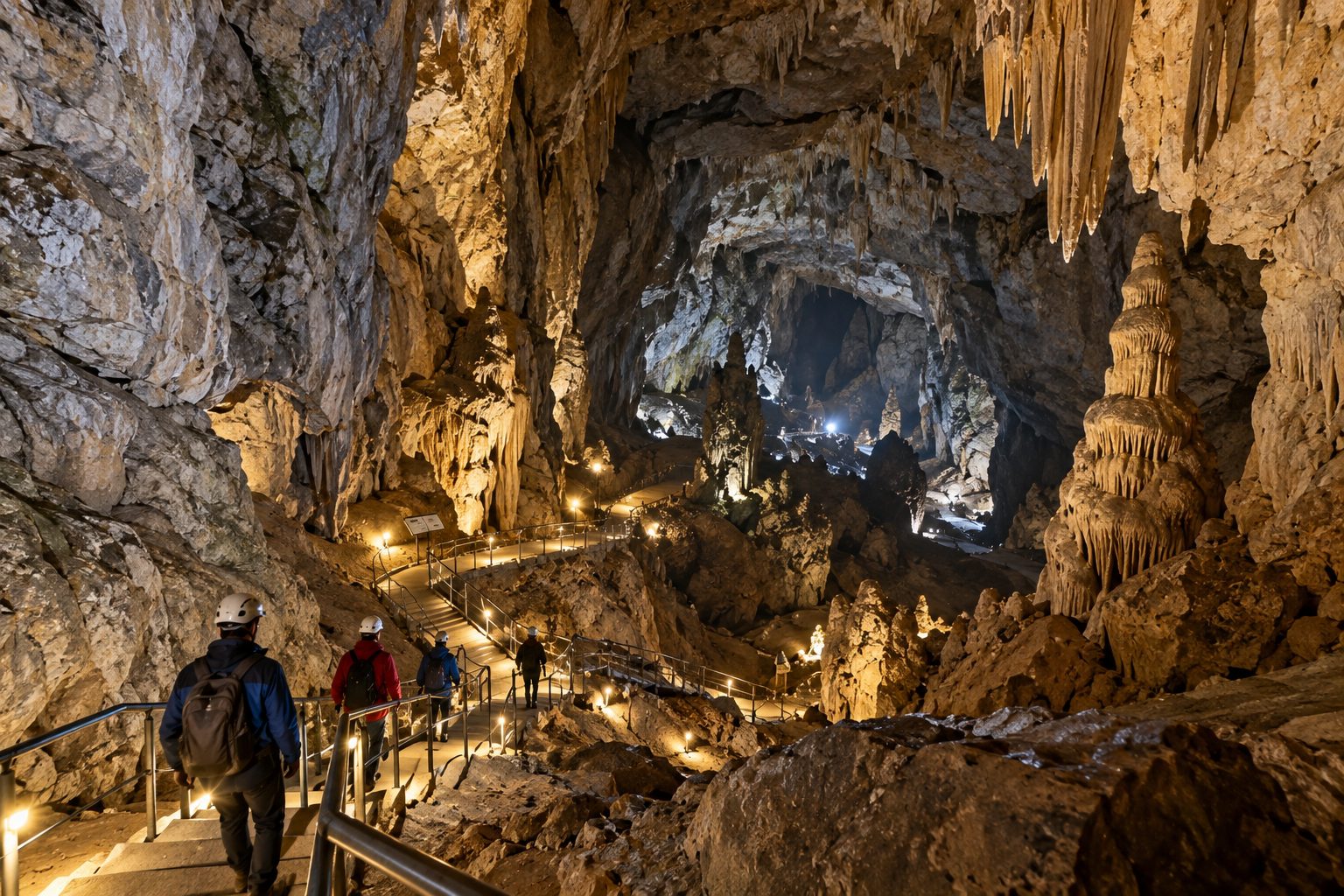
Located near Bab Boudir, roughly 30 kilometers south of Taza, Friouato is one of Morocco’s best-known deep karst cavities.
The entrance is dramatic. Rather than entering through a small horizontal opening, visitors approach a large natural shaft that descends into the limestone massif. The cave reaches approximately 270 meters in depth, making it one of the deepest major cave systems associated with visitor access in Morocco.
Friouato Reopened in 2026
Friouato had been closed for several years while extensive safety and rehabilitation work was carried out.
The cave officially reopened on July 27, 2026 after a project designed to reinforce unstable areas, renovate internal pathways, improve lighting, and make visitor access safer.
The restoration included engineering work reaching depths of around 130 meters inside the cave and improvements to paths and visitor facilities. Travelers planning a visit can read the latest information about the Friouato Cave reopening.
Because access conditions can always change after heavy weather, maintenance, or safety inspections, it is still sensible to verify current opening conditions before traveling.
What Makes Friouato Geologically Interesting?
Friouato is not simply a hole in the ground. It forms part of the broader karst system of the Tazekka and Middle Atlas region.
Water has exploited fractures and soluble carbonate rock, enlarging underground passages over a very long period. Research on the surrounding karst landscape indicates that the Friouato system records changes in drainage, erosion, landscape elevation, and environmental conditions.
Older interpretations suggest the main shaft once functioned as an important point where surface water entered the underground system. Later changes in topography and drainage transformed how water moved through the landscape.
This is why visiting Friouato can be interesting even for someone who is not a speleologist. You are effectively descending into a geological drainage system created inside the mountain.
Explore the Middle Atlas Beyond the Caves
15-Day Fossils & Minerals Collecting Trip
Cross the Middle Atlas on a guided journey through volcanic terrain, fossils, minerals, mines, and other geological environments with Atlas Geo Tours.
Tazekka National Park and the Underground World Around Taza
Friouato is only part of the story, and the best caves in Morocco near Taza belong to a much wider karst region. The wider Taza and Tazekka region contains a remarkable concentration of karst features. Limestone massifs, sinkholes, caves, springs, underground drainage systems, and rocky plateaus make this part of Morocco especially important for speleology.
For travelers already interested in geology, the region demonstrates something that is easy to forget when looking at mountains from the surface. A landscape does not end at ground level. Water may be moving beneath your feet through fractures, galleries, and underground rivers that never appear on an ordinary map.
The Middle Atlas also forms part of longer geological journeys through Morocco. Atlas Geo Tours’ 15-day fossils and minerals Middle Atlas trip crosses the mountain region while exploring volcanic terrain, fossils, minerals, mines, and other geological environments.
Chaara Cave: An Underground River With a Jurassic Surprise
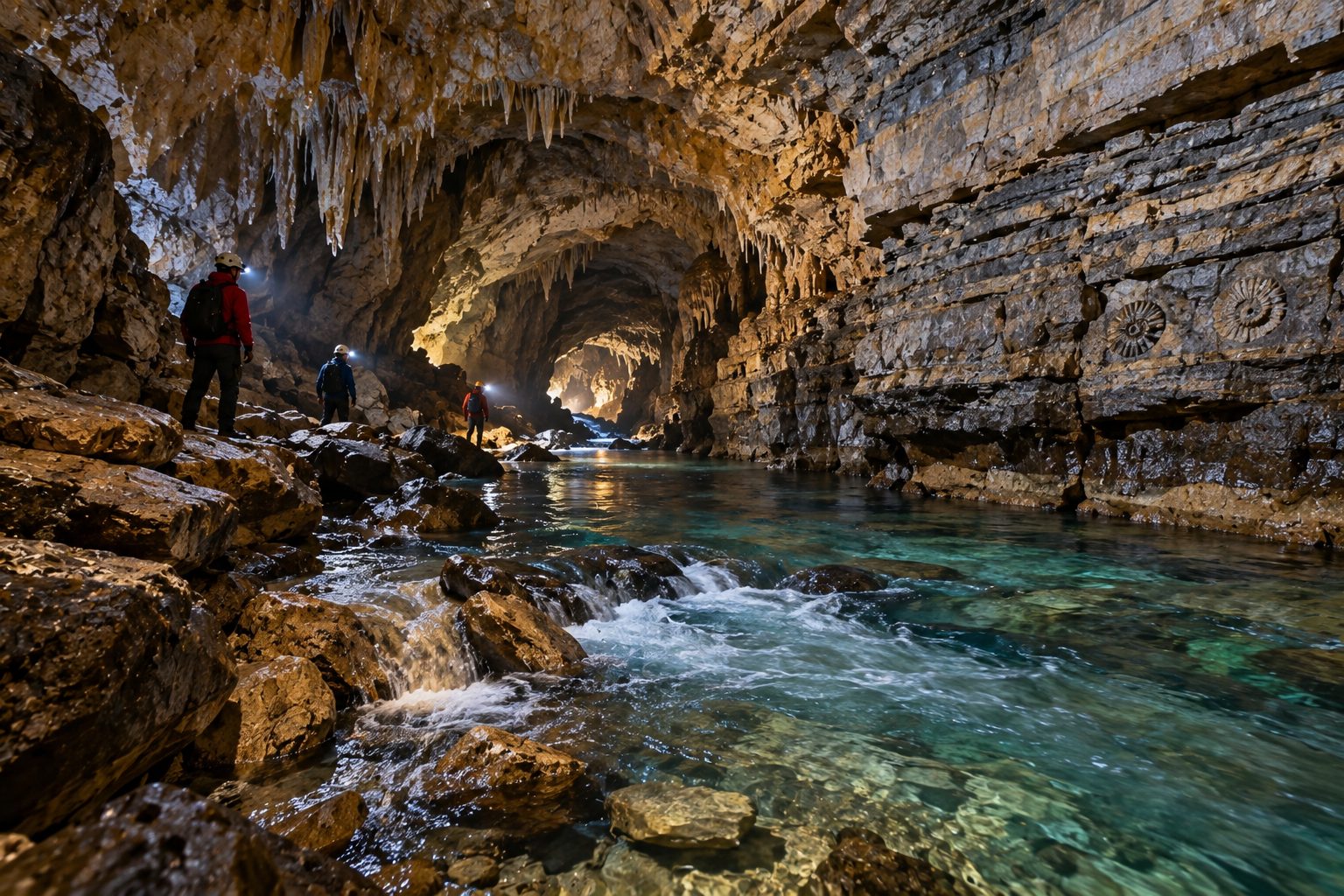
Another extraordinary cave in the Taza region is Chaara Cave, also written in some sources as Rhar Chara.
Chaara is an active karst cavity containing underground water and galleries on more than one level. But the cave became particularly important to paleontologists because of what researchers found inside its Jurassic rock.
A fossilized skull and jaw belonging to a teleosauroid crocodylomorph, a marine crocodile-like reptile from the Early Jurassic, were discovered in the roof of a gallery hundreds of meters inside the cave. The fossil remains embedded in the rock because removing it could cause irreversible damage.
This creates a fascinating geological situation. The cave itself is much younger than the Jurassic rock surrounding it. Water dissolved passages through limestone and dolomite that already contained a fossil created vastly earlier.
The underground cavity therefore exposes two completely different chapters of Earth history. One chapter records a Jurassic marine animal. The other records much later karst erosion and cave formation.
Is Chaara Cave a Tourist Cave?
Chaara should not be treated like a simple developed attraction. Its underground river, gallery system, difficult access, and scientific importance place it closer to specialist speleology and geological exploration.
Visitors should not enter such systems without knowledgeable local or professional guidance.
Hercules Caves: Morocco’s Most Famous Coastal Cave
Not every important Moroccan cave lies deep in the Atlas Mountains. Near Tangier, the Caves of Hercules offer a completely different underground experience.
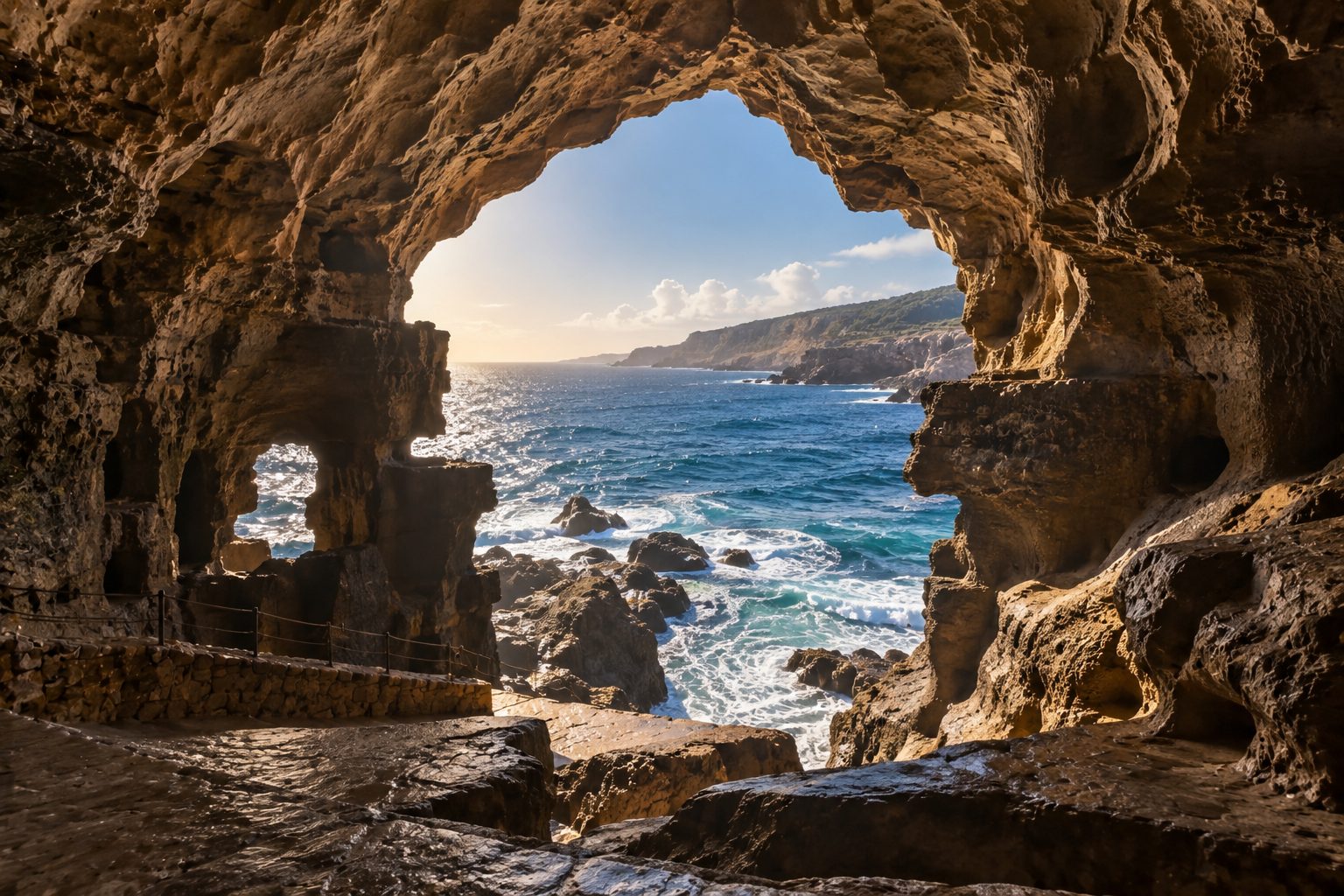
Located near Cape Spartel on Morocco’s Atlantic coast, the caves are among the country’s best-known natural attractions. Their popularity comes from a combination of geology, coastal scenery, and legend.
According to tradition, the caves are associated with Hercules and his famous labors. The site also has a dramatic opening facing the ocean, creating one of Morocco’s most recognizable cave views.
For travelers, Hercules Caves are much easier to incorporate into a conventional Morocco itinerary than remote speleological systems. Atlas Geo Tours’ 8-day Morocco tour from Tangier to Marrakech begins in Tangier and includes a visit to Hercules Cave before continuing toward Chefchaouen, Fes, the Middle Atlas, and the Sahara.
Coastal Caves Form Differently
Hercules Caves also provide a useful contrast with the Middle Atlas caves. Mountain karst caves are largely associated with groundwater dissolving limestone from within.
Coastal caves can also be influenced by wave action, erosion, sea-level change, weathering, and weaknesses in the rock. The result is a landscape where underground geology meets the Atlantic Ocean.
Visit Hercules Cave on a Classic Morocco Route
8-Day Tour from Tangier to Marrakech
Begin in Tangier with a visit to Hercules Cave, then continue toward Chefchaouen, Fes, the Middle Atlas, and the Sahara.
Grotte du Chameau: Stalactites, Water, and the Beni Snassen Mountains
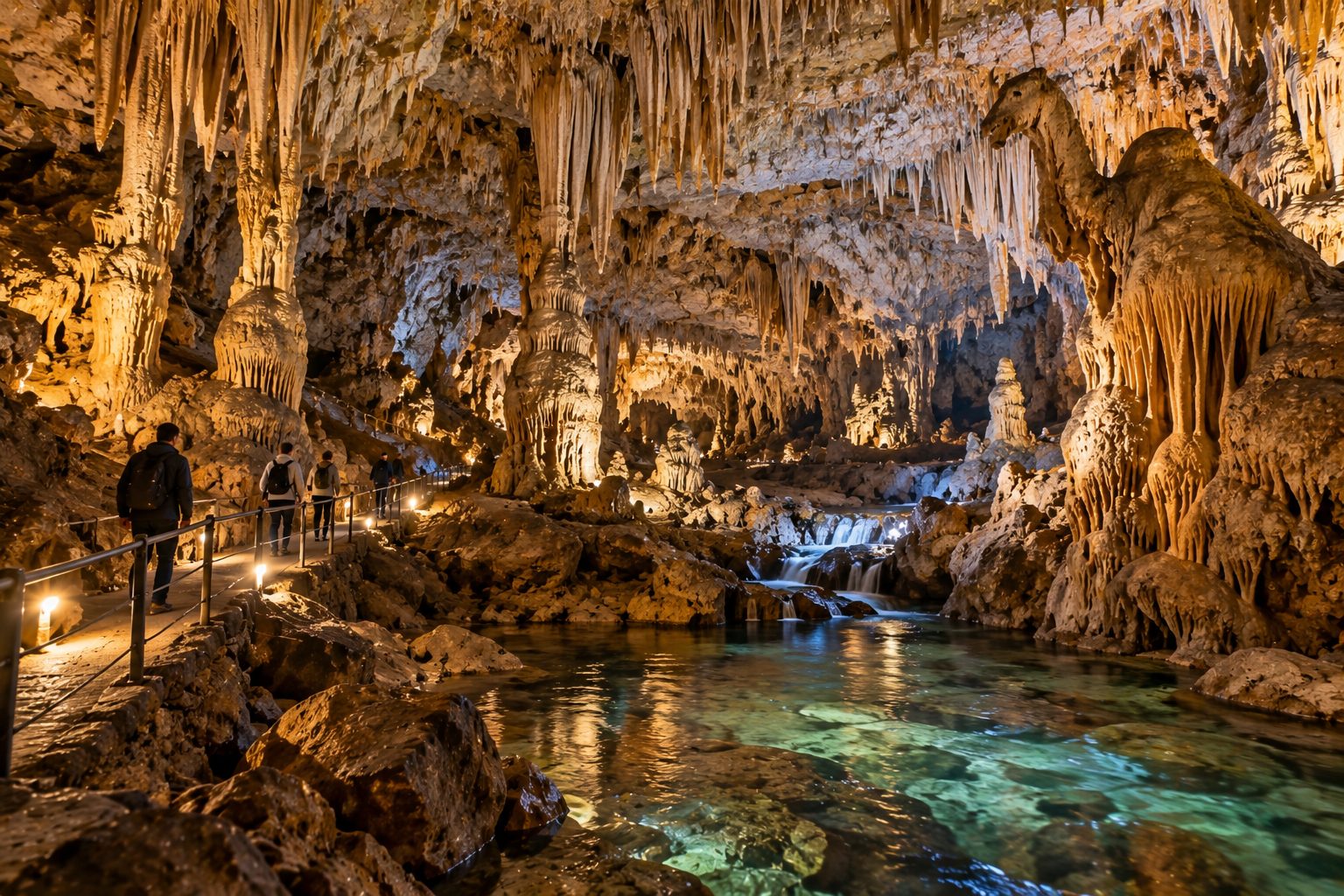
Farther east, the Beni Snassen Mountains contain another of the best caves in Morocco for underground scenery. Grotte du Chameau, or Camel Cave, lies in the Zegzel Valley in Morocco’s Oriental region. Its name is linked to a natural rock formation or stalagmite whose shape recalls a camel.
The cave contains several levels of galleries. The upper parts preserve spectacular mineral formations, including stalactites and stalagmites, while lower areas are associated with an active underground water system after periods of heavy rainfall.
The wider landscape is also important. The Beni Snassen Mountains contain limestone terrain where rainfall enters fractures and reappears through springs and underground channels. This makes Grotte du Chameau useful for understanding how karst works as a complete hydrological system rather than simply as an empty underground room.
How Do Stalactites and Stalagmites Form?
Water entering limestone can dissolve small amounts of calcium carbonate. When that mineral-rich water reaches an open cave chamber, some dissolved carbon dioxide escapes. Calcium carbonate can then be deposited.
A formation growing downward from the ceiling is a stalactite. A formation growing upward from the floor is a stalagmite. When the two eventually meet, they can form a column.
These structures may grow extremely slowly. Their shape depends on water flow, mineral concentration, temperature, airflow, and the geometry of the cave.
Kef Toghobeit: Morocco’s Deepest Known Cave
Travelers searching online for Morocco caves may eventually encounter the name Kef Toghobeit. This cave belongs to a completely different category.
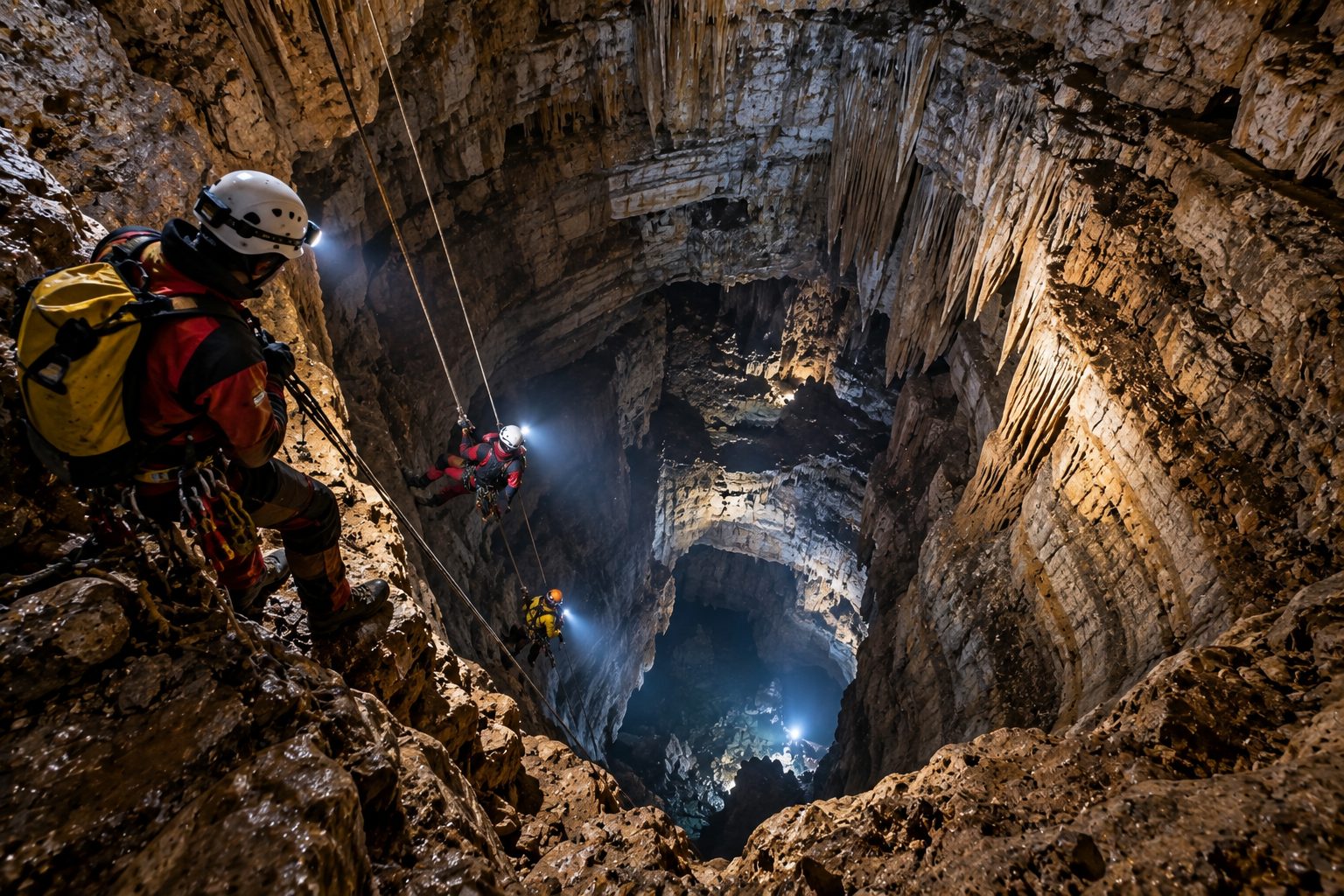
Located in the Rif near Bab Taza in Chefchaouen Province, Kef Toghobeit reaches an explored depth of approximately 722 meters, making it the deepest known cave in Morocco.
A depth of more than 700 meters is difficult to imagine from the surface. It means that exploration involves a major vertical journey through shafts, constricted passages, loose rock, and complex underground terrain.
Is Kef Toghobeit One of the Best Caves in Morocco to Visit?
Scientifically and speleologically, absolutely. For normal tourists, no.
Kef Toghobeit is not a conventional walk-in attraction. Deep-cave exploration requires:
- specialist vertical equipment
- ropes
- helmets
- reliable lighting
- backup lighting
- navigation skills
- technical cave experience
- physical endurance
- knowledge of underground rescue procedures
Its inclusion among the best caves in Morocco to visit therefore needs an important qualification. It is best understood as one of Morocco’s great underground geological sites, but not as a casual sightseeing stop.
Win Timdouine: The Cave of Lakes Near Agadir
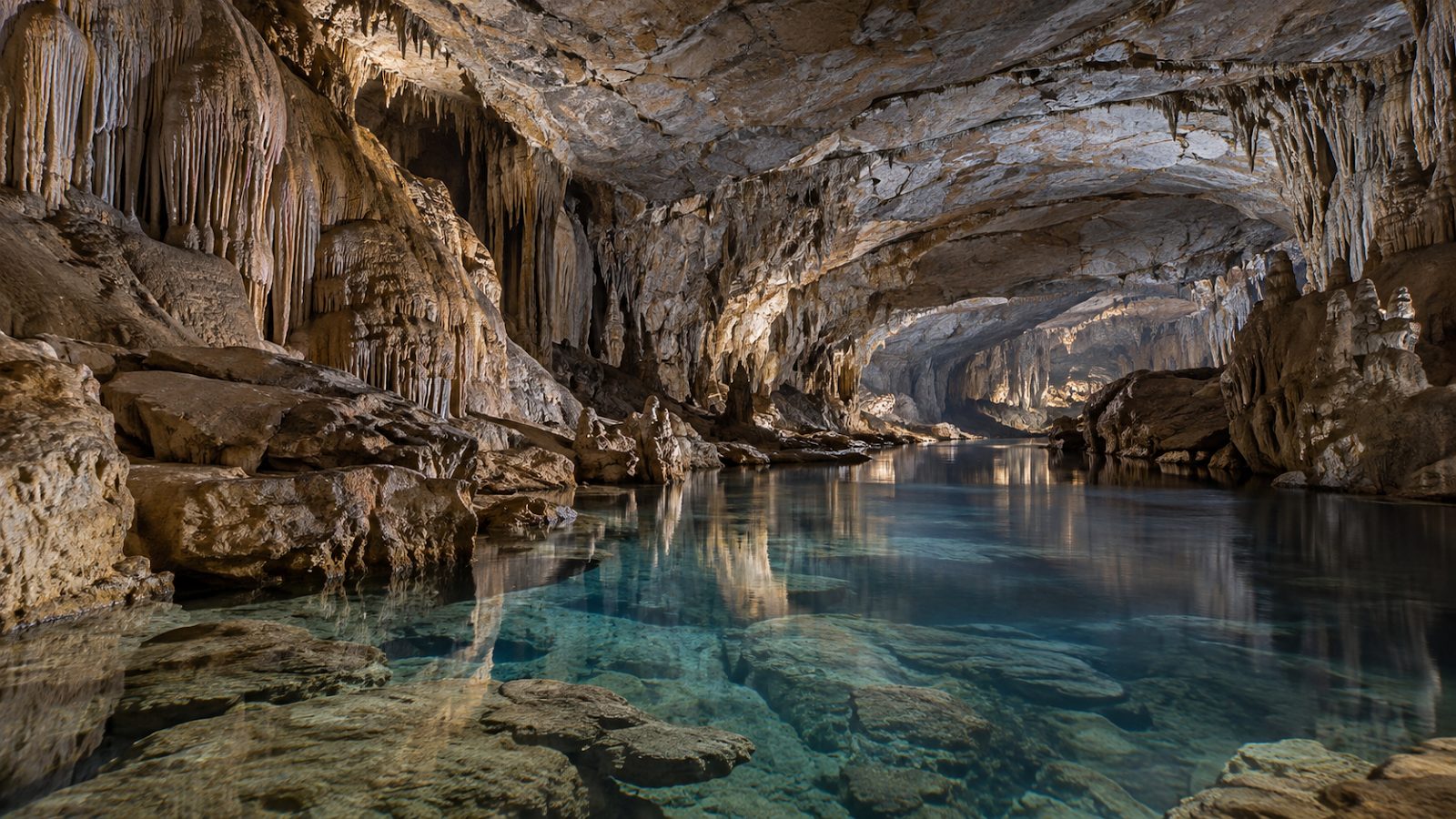
The High Atlas region northeast of Agadir hides another exceptional underground system and one of the best caves in Morocco for water-filled galleries. Win Timdouine, whose Amazigh name is commonly interpreted as “cave of lakes,” contains an extensive network of subterranean passages associated with underground water.
Speleological inventories report roughly 19 kilometers of explored or documented galleries, making it one of Morocco’s longest known cave systems.
The cave lies beneath the Tasroukht plateau. Water moving through fractured limestone has produced long underground routes and pools that help explain the cave’s name.
For geologists and hydrogeologists, Win Timdouine is especially interesting because the cave is also an underground water system. Water stored and transmitted through karst rock can become an important regional resource.
Not a Normal Tourist Walk
Like Kef Toghobeit, deeper exploration of Win Timdouine is specialist territory. Parts of the system contain water, and serious exploration can involve difficult conditions.
Visitors should never assume that a cave is safe simply because an entrance is accessible. Conditions may change after rainfall, and an underground stream can behave very differently during wet weather.
What Is Karst and Why Is It Important in the Middle Atlas?
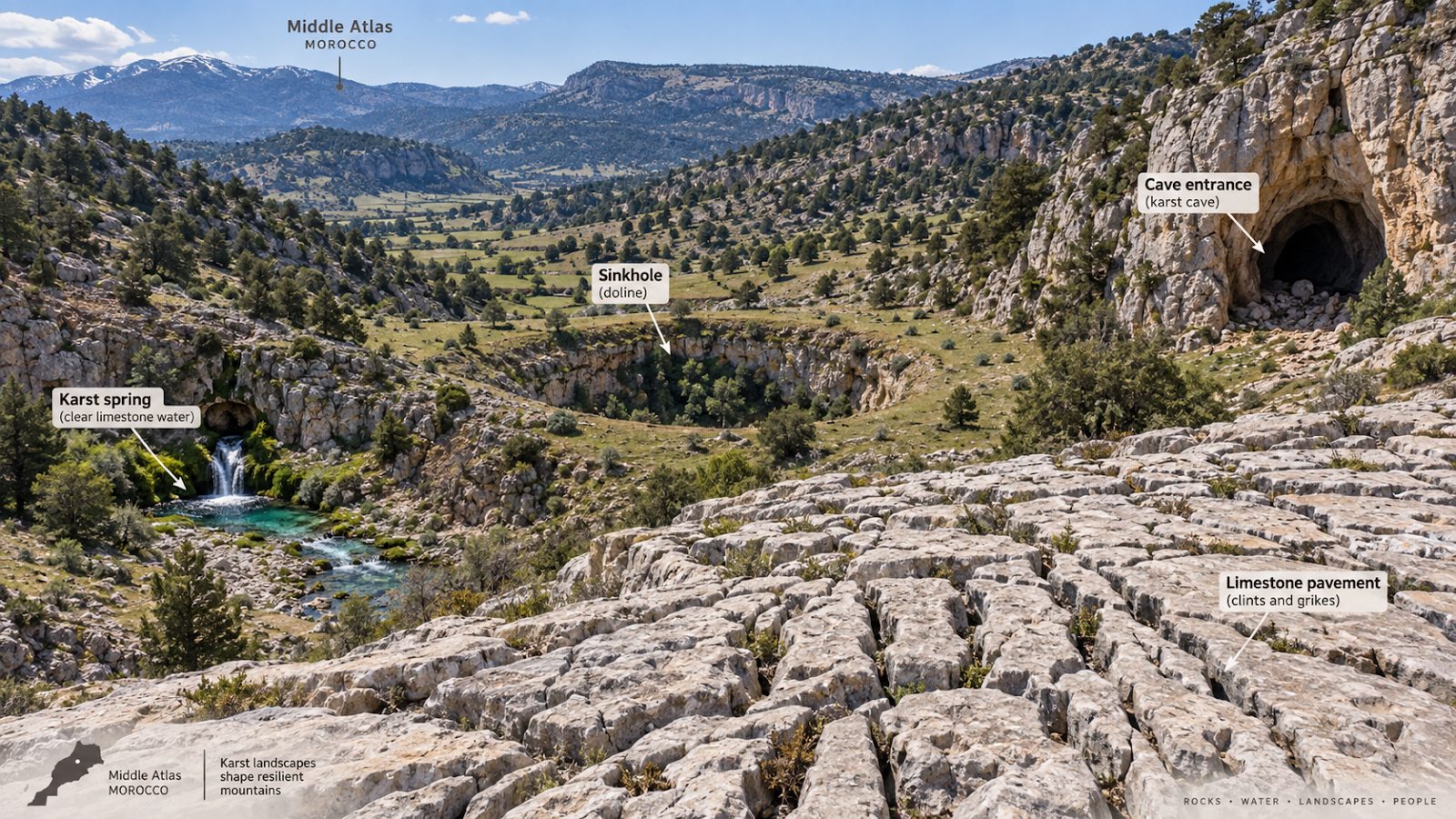
Many of the best caves in Morocco, including the most interesting caves near Taza Morocco, belong to karst landscapes. Karst develops where soluble rocks, especially limestone and dolomite, interact with water. But caves are only the underground part of the system.
On the surface, travelers may also see:
Dolines
These are depressions or sinkholes formed by dissolution or collapse.
Poljes
Large enclosed karst depressions can extend across significant areas and may temporarily collect water.
Limestone Pavement
Exposed limestone can develop grooves, cracks, and sharp surfaces as rainwater dissolves the rock.
Springs
Water that disappeared underground may eventually return to the surface through powerful karst springs.
Recent research in the Middle Atlas shows an impressive diversity of both underground and surface karst landforms, including caves, dry valleys, springs, poljes, and other dissolution features.
Once you recognize these features, a cave stops looking like an isolated attraction. It becomes part of a much larger geological system.
Why Caves Matter for Groundwater
Karst caves also play an important role in water supply. In ordinary porous rock, groundwater may move slowly through tiny spaces between grains. Karst behaves differently.
Large fractures and underground channels can allow water to travel much faster. A heavy rainfall event in the mountains can sometimes influence springs many kilometers away.
This also makes karst aquifers vulnerable. Pollution entering a sinkhole or fracture may travel rapidly underground with much less natural filtration than people expect.
Modern research in the Middle Atlas has shown that faults, fractures, carbonate rocks, and underground conduits create complex groundwater connections across the mountain system. Understanding caves is therefore not only about tourism. It is also about understanding one of Morocco’s important natural water systems.
Caves as Archives of Past Climate
Cave formations can preserve information about environmental conditions outside. As stalagmites grow layer by layer, their chemistry can respond to rainfall, vegetation, temperature, and the water entering the cave. Scientists can date some of these layers and use them to reconstruct environmental changes.
Cave sediments can also contain:
- pollen
- animal remains
- archaeological material
- transported sediments
- mineral deposits
- evidence of flooding
This means a cave can function like a geological archive. The entrance may look static, but its sediments and mineral deposits record repeated changes in climate and water movement.
Which of the Best Caves in Morocco Is Right for You?
Not every cave should be approached in the same way.
For First-Time Visitors
Friouato Cave is one of the most compelling choices, especially following its 2026 reopening and safety improvements.
For a Coastal Experience
Hercules Caves near Tangier are among the easiest of the best caves in Morocco to include in a classic itinerary.
For Stalactites and Karst Scenery
Grotte du Chameau offers a strong combination of underground formations, water, and Beni Snassen mountain scenery, depending on current access conditions.
For Geology Enthusiasts
The wider Taza and Middle Atlas karst region offers the richest opportunity to understand caves as part of a geological system.
For Experienced Speleologists
Kef Toghobeit, Win Timdouine, and complex systems such as Chaara belong to a more technical category. They should only be explored with appropriate specialist expertise and equipment.
What to Bring When Visiting a Cave in Morocco
The equipment required for the best caves in Morocco depends entirely on the cave. A developed visitor site requires much less preparation than technical speleology.
For an ordinary cave visit, useful items may include:
- comfortable walking shoes with good grip
- lightweight warm layer
- water
- small backpack
- headlamp if allowed or recommended
- fully charged phone
- camera
- clothing that can handle dust or moisture
Underground temperatures may feel cool even when the surface is hot. Rock surfaces can also be wet and slippery.
If your Morocco journey includes wider geological fieldwork, Atlas Geo Tours’ geology tour packing guide explains useful clothing, footwear, field equipment, and preparation for rocky and mountain terrain.
For technical caving, normal hiking equipment is not enough. Specialist caves require proper helmets, lighting systems, ropes, harnesses, and trained guidance.
Cave Safety Should Always Come First
Even the best caves in Morocco to visit are natural environments. They can contain unstable rocks, sudden drops, water, slippery surfaces, narrow passages, and areas where rescue is extremely difficult.
Never enter a technical cave alone. Pay attention to weather before exploring systems connected with underground rivers. Heavy rainfall occurring many kilometers away can sometimes influence water levels underground.
Respect closures and local restrictions. Never cross safety barriers simply because a passage looks interesting.
And do not assume information from an old travel blog still reflects current access. Conditions can change because of conservation work, flooding, rock instability, or scientific research.
Protecting Morocco’s Underground Heritage
Caves can take thousands of years to create and only seconds to damage.
Stalactites should never be broken or collected. Visitors should avoid touching delicate mineral formations because oils and dirt from hands can affect their surfaces. Do not leave rubbish. Do not write names on walls. Do not disturb bats or other underground wildlife. Do not remove fossils or archaeological objects from protected or scientifically important sites.
A cave is valuable partly because everything remains in its original context. Removing one object can destroy information that has survived for centuries or far longer.
Discovering a Different Side of Morocco
Morocco is often experienced through what rises above the ground. The Atlas Mountains. The Rif. Kasbahs. Dunes. Cliffs. But cave exploration reveals another dimension. Beneath some of those landscapes lies a hidden geography of shafts, galleries, underground rivers, springs, and mineral formations.
Friouato demonstrates the scale of the Middle Atlas karst. Chaara connects cave geology with Jurassic paleontology. Hercules Caves show where coastal geology meets the Atlantic. Grotte du Chameau reveals the relationship between limestone, mineral formations, and underground water. Kef Toghobeit demonstrates how deep Moroccan karst can become. Win Timdouine shows how vast underground drainage networks can develop beneath the Atlas.
For travelers already interested in Morocco’s fossils, rocks, and mountain landscapes, caves offer a natural next step. Atlas Geo Tours’ Geo Tours explore Morocco as a geological destination, connecting fossils, minerals, mountains, ancient environments, and desert landscapes.
The best caves in Morocco to visit are therefore not only beautiful underground places. They help explain how Morocco works as a geological landscape.
Rain falls on a mountain. Water disappears into limestone. It follows fractures beneath the surface. Passages grow. Underground rivers develop. Minerals crystallize drop by drop. Eventually, water may emerge again through a spring kilometers away.
The landscape visible above ground is only half the story. The rest continues underneath.
Turn Morocco’s Geology Into Your Next Journey
Atlas Geo Tours – Geo Tours
Explore Morocco as a geological destination, connecting fossils, minerals, mountains, ancient environments, and desert landscapes.
Frequently Asked Questions About Caves in Morocco
What are the best caves in Morocco to visit?
Friouato Cave near Taza is one of the strongest choices for geology and underground scenery. Hercules Caves near Tangier are ideal for a more accessible coastal visit. Grotte du Chameau in the Beni Snassen Mountains is another notable cave, subject to current access conditions.
Is Friouato Cave open in 2026?
Yes. Friouato Cave officially reopened on July 27, 2026 after extensive rehabilitation and safety improvements. Visitors should still confirm current opening conditions before traveling.
Where is Friouato Cave?
Friouato is located near Bab Boudir, approximately 30 kilometers south of Taza in northern Morocco.
How deep is Friouato Cave?
Friouato reaches approximately 270 to 271 meters in depth according to geological and tourism sources.
What is the deepest cave in Morocco?
Kef Toghobeit in the Rif is the deepest known Moroccan cave, with an explored depth of about 722 meters. It is a technical speleological site rather than a normal tourist cave.
Are there caves in the Atlas Mountains?
Yes. The Middle and High Atlas contain extensive limestone and dolomite formations where karst processes have created caves, shafts, springs, underground rivers, and sinkholes.
Why are there so many Middle Atlas caves?
Large areas of the Middle Atlas consist of soluble carbonate rocks. Rainwater enters fractures, gradually dissolves limestone and dolomite, and creates underground drainage networks.
Is Hercules Cave a natural cave?
The Hercules Caves near Tangier include natural coastal cave formations, though parts of the site also show evidence of historical human modification. They are among Morocco’s best-known tourist cave attractions.
What is special about Chaara Cave?
Chaara contains an active underground river system and an Early Jurassic fossil of a teleosauroid crocodylomorph preserved within the rock hundreds of meters inside the cave.
What is Win Timdouine?
Win Timdouine is an extensive cave system northeast of Agadir associated with underground lakes and water-filled passages. Speleological records describe roughly 19 kilometers of underground development.
Can tourists enter Kef Toghobeit?
Kef Toghobeit is not a normal tourist attraction. Its extreme depth and technical passages mean exploration is appropriate only for properly equipped and experienced speleologists.
Are Morocco caves safe to visit?
Developed tourist caves can generally be visited by following official guidance, but natural caves may involve serious risks. Always check current access conditions and never enter technical cave systems without experienced guidance and appropriate equipment.
What causes stalactites and stalagmites?
Mineral-rich water dripping through limestone releases dissolved carbon dioxide and deposits calcium carbonate. Deposits growing from ceilings become stalactites, while those growing upward from the floor become stalagmites.
Can caves in Morocco be combined with a geology tour?
Yes. The Middle Atlas, Taza region, Rif, and other areas combine karst caves with mountain geology, fossils, mineral sites, springs, and other geological features, making cave exploration a natural addition to a geology-focused Morocco journey.
Explore Related Geology Tours in Morocco
Ready to see Morocco’s geology in person? These Atlas Geo Tours combine fossils, minerals, mountains, and dramatic landscapes.


